Are you wondering why some construction projects look profitable at the beginning but end up losing money? Even when planning seems right, profits often drop due to delays, rising expenses, and poor or missed coordination. So, what is really going wrong?
The answer is not always obvious. Many businesses rely on separate tools, which makes it tough to track costs and manage work clearly. Because of this, small issues grow into bigger financial issues.
This is where construction ERP solutions step in. By bringing projects, finances, and workflows into one system, platforms like Bouwflow help teams stay in control.
In this blog, we will walk you through how ERP helps enhance profit margins and what steps you can take to get better outcomes.
Why Profit Margins Are Hard To Manage
Construction projects involve multiple teams, resources, and timelines. Because of this, even small mistakes can lead to higher costs and lower returns. Understanding these challenges is the first step toward finding the right solutions.
Rising Costs
The cost of materials varies and can be hard to monitor without the right process in place. It is quite common for problems to come up only after costs are already higher than expected.
Project Delays
When planning is not accurate, projects take longer than expected. As a result, labor costs increase, and resources are used for a longer time. This directly reduces the overall margin of profits.
Disconnected Tools
Organizations use spreadsheets and multiple systems to manage their work. Since these systems are not integrated, there is room for data loss, data discrepancies, and inaccuracies in gathering data.
What Are Construction ERP Solutions And Why They Matter
To overcome these challenges, construction companies need a system that connects all operations. This is where ERP plays an important role. This connects all business activities in one place and improves efficiency and control.
One system
This works as one system for all business operations. Simply put, ERP systems bring together projects, finance, procurement, and workflows into one platform. This means teams no longer need to switch between different tools, which simplifies daily operations.
Real-time Data
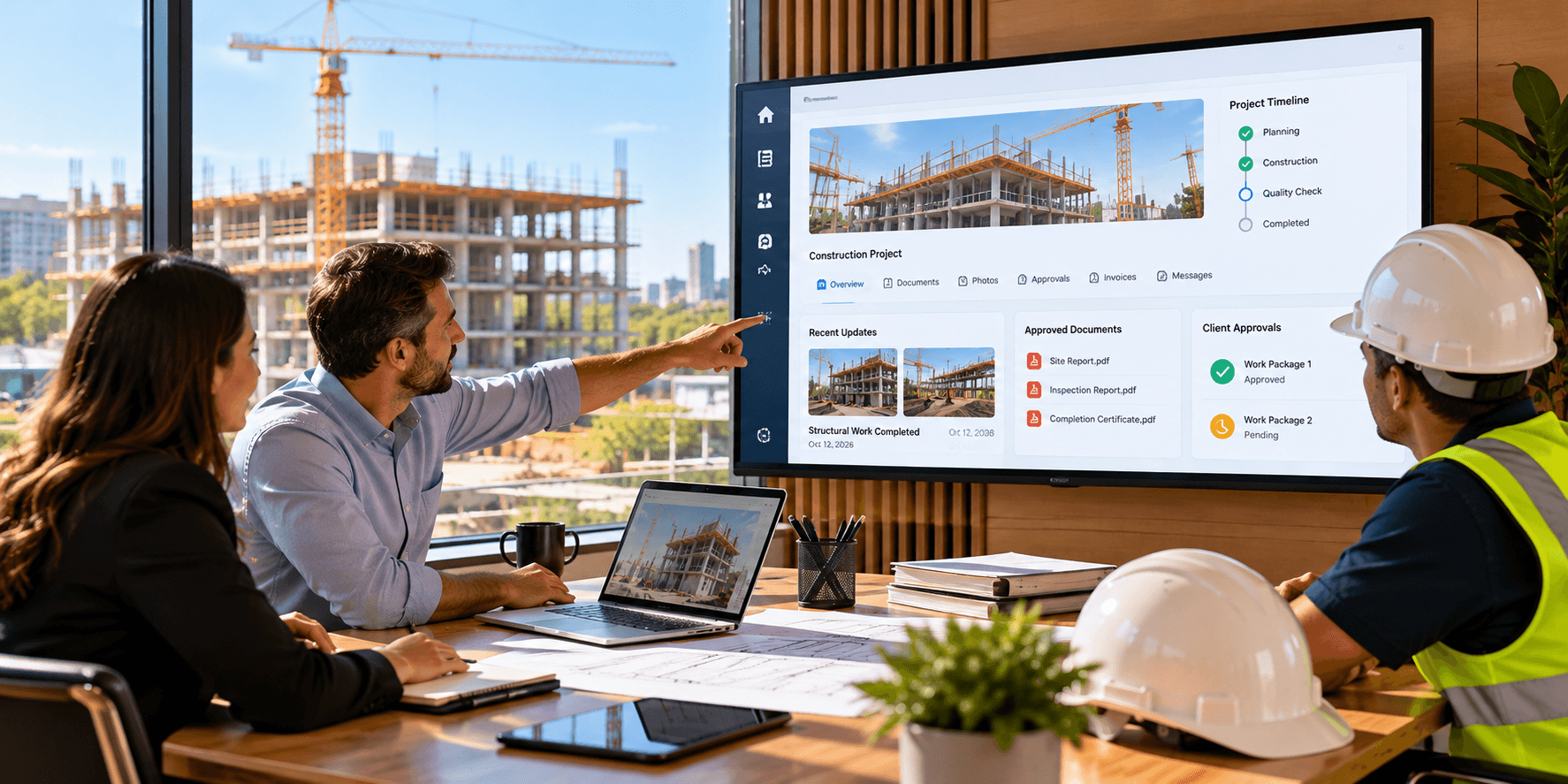
With ERP, all teams can access updated information instantly. This improves communication between the office and site teams. This ensures that both stay aligned and reduces the chances of miscommunication during project execution.
Cost Tracking
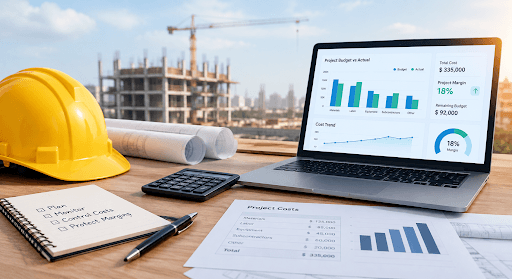
ERP allows companies to track budgets and expenses continuously. Because of this, businesses can identify cost issues early and take action before they affect profit margins.
How ERP Project Management Features Improve Efficiency
Project management is one of the key strategies for protecting profit margins in organizations. Built-in capabilities of ERP make project management easier and more effective.
Better planning and scheduling
The use of ERP makes planning more efficient, and the system assists in developing project schedules. Project tasks are performed timely, and the risk of delays and additional expenses is minimized.
Task allocation and coordination
Tasks can be assigned and monitored using ERP, which allows all members of the team to know what should be done by whom at any point in the project.
Real-time project updates
By including the capabilities of construction project management software in ERP, project managers can observe projects’ performance in real time at all stages of development.
Why Quotation And Billing Accuracy Impacts Profit Margins
Profit margins are not only affected during execution but also during the early and final stages of a project. Even small mistakes in this stage can reduce benefits or delay payments. Therefore, having a clear and structured billing process is crucial for maintaining financial stability.
Accurate cost estimation
Accurate cost estimation is the first and most important step in safeguarding profit margins. When project estimates are accurate, companies can avoid underpricing their work. Additionally, better estimates help set genuine budgets, which reduces the risk of unexpected losses during the project.
Faster invoicing and payments
Timely invoicing helps businesses receive payments without delays. When invoices are sent without delays, payments are received faster, which helps ventures manage ongoing costs. This also ensures that projects don’t face financial slowdowns due to late payments.
Automation through billing systems
Manual billing processes often lead to mistakes, such as incorrect amounts or missing details. Using quotation and billing software reduces manual work and improves accuracy. As a result, teams spend less time fixing problems and more time paying attention to crucial work.
Better Financial Visibility
A structured billing process offers clear visibility into project earnings and outstanding amounts. This assists businesses in monitoring revenue more effectively and making better financial decisions based on real-data.
Stronger Client Trust
Accurate and transparent billing builds trust with clients. When invoices are clear and consistent, it reduce disputed and enhances professional relationships, which can lead to repeat business.
How Accounting Software Supports Better Financial Control
Financial management is very important because it helps to make a huge difference in profits. Without it, it will be difficult to trace where the funds have been used.
Expenses management in real-time
By tracking all expenses within one system, companies can control their budgets better. In such a way, it becomes possible to avoid additional costs.
Payments and cash flow management
The availability of clear financial records facilitates payments and cash flow management. It is ideal for financial management in business and helps decrease delays.
Avoidance of errors
Accounting Software for construction is designed to automate the process. Thus, mistakes associated with financial management will be avoided.
Why Using Multiple Tools Can Reduce Profit Margins
At first, using different tools for different tasks may seem useful. However, as the project grows, this setup creates gaps between systems and teams. Over time, these gaps lead to inefficiencies that directly affect the expense control and overall margins.
Disconnected data across systems
When systems are not linked, teams must enter the same data multiple times. Due to this, teams often have to enter the same data many times. This increases the chances of mistakes and creates confusion when data doesn’t match across departments.
Delays in decision-making
Since information is spread across different tools, managers do not always have access to real-time updates. Because of this, crucial decisions are delayed. Even minor delays in decision-making can impact timelines and enhance the project budget.
Higher costs and inefficiencies
Using more than one tool means paying for multiple software and training teams to use each one. In addition, employees spend more and more time switching between systems instead of paying attenton on their tasks. This reduces efficiency and adds unnecessary operational expenses.
Why Integrated ERP Systems Work Better
Instead of using separate tools, construction companies are now moving toward integrated systems. This approach helps improve both efficiency and overall profitability.
Linking projects and financial information
ERP integrates all activities under one umbrella, making it easy for users to monitor the performance of their projects while managing costs.
Enhancing teamwork
With a common platform, all teams are able to communicate effectively. This minimizes errors, thereby improving project execution.
Facilitating quick and effective decision-making
ERP provides real-time feedback on all project activities, helping managers act immediately when problems arise. Bouwflow platform facilitates this through its integration of project and finance management activities into one platform.
Simple Steps To Improve Profit Margins Using ERP
Improving profit margins requires a structured approach. In many cases, small enhancements in the daily processes can create better control and long-term results. By using ERP effectively, construction companies can manage expenses, reduce mistakes, and improve overall efficiency.
Use One System
Using a single system will enable you to combine all the processes into one. You won't need to jump from one application to another since you can get all the data regarding your project, finance, and operations in one single place.
Plan and Track Costs
Effective budgeting and cost monitoring are crucial for being under budget. With ERP software, organizations have an easy way of monitoring costs throughout the entire process. This enables companies to know whenever there are increasing costs, which may be costly to the profit margin.
Use Data for Decisions
Data provides insights into project performance. By using this information, companies can improve efficiency and reduce unnecessary costs.
Profit margins also depend on how well financial systems are connected with project workflows. To understand this better, you can explore:
Also Checkout: How to Integrate Cloud ERP With Construction Accounting Software
Final Thoughts
Construction profit margins may be hampered due to delays, lack of proper planning, and inefficiencies in management systems. With the correct methods, however, the problems can easily be handled.
ERP systems ensure that all aspects of the project are in place and linked. Such a system provides for better visibility and minimization of error, and Bouwflow uses this method to integrate all activities.
By using tools like Bouwflow, businesses can gain better control over their operations, reduce costs, and improve overall profitability in a structured and sustainable way.