Construction projects these days require a lot of teams to work together, have strict deadlines, and involve constant communication across various platforms at different stages. Any type of gap in communication can mess up the whole project, including the budget and project timeline. Unfortunately, there are still so many companies that depend on manual processes & outdated software, which leads to errors in calculation, missed updates, and a lack of real time visibility to progress. This makes the whole process very difficult for the manager to track progress, manage the spending, and communicate across the team. It is even difficult to successfully manage multiple construction projects at the same time.
For such cases, automation becomes very crucial. Everybody is doing business, but only a few are closing more projects in less time with complete accuracy with the help of automation. Automation improves the construction workflow by making it easier to control and more efficient. It does this by getting rid of unnecessary steps, fixing manual errors, and connecting teams through a centralized system. Bouwflow assists contractors in conducting their business operations, monitoring the real-time performance, reducing risks, and making faster decisions throughout the construction lifecycle. It enhances collaboration, maximizes resource allocation, and minimizes delays caused by errors in manual processing.
Lifecycle of a Construction Project Explained
Construction projects consist of several stages, each requiring accurate data and proper management.
Planning Stage: The project objectives and budgeting are determined. Incorrect planning affects all phases of construction. If you are implementing new solutions in this phase, we recommend that you go over the ERP implementation checklist for construction to avoid future challenges.
Design Stage: Architects and engineers draw designs for the project. Changes during this stage should be documented properly in the changes track.
Execution Stage: This is the busiest stage, with the construction taking place. Multi-tasking among many workflow processes complicates management.
Monitoring and Control: The progress and budget are tracked, and any changes needed. Automated software makes it easy by offering instant updates.
Project Completion: Organized system, make sure that nothing is missed at this crucial stage, and final delivery, documentation, and handover take place during this time.
Importance of Automation in the Construction Business
With a growing number of projects and tight deadlines, the construction industry is becoming more complicated. Relying solely on manual processes is not enough anymore. Here are a few benefits of automation you can count on:
Reduces Human Mistake Chances: Manual data entry has a high chance of generating errors. Automated processes help eliminate such problems.
Saves Time: Repetitive tasks such as scheduling, reporting, and billing can be done with automation rather than getting them done manually and time can be utilized for something more productive.
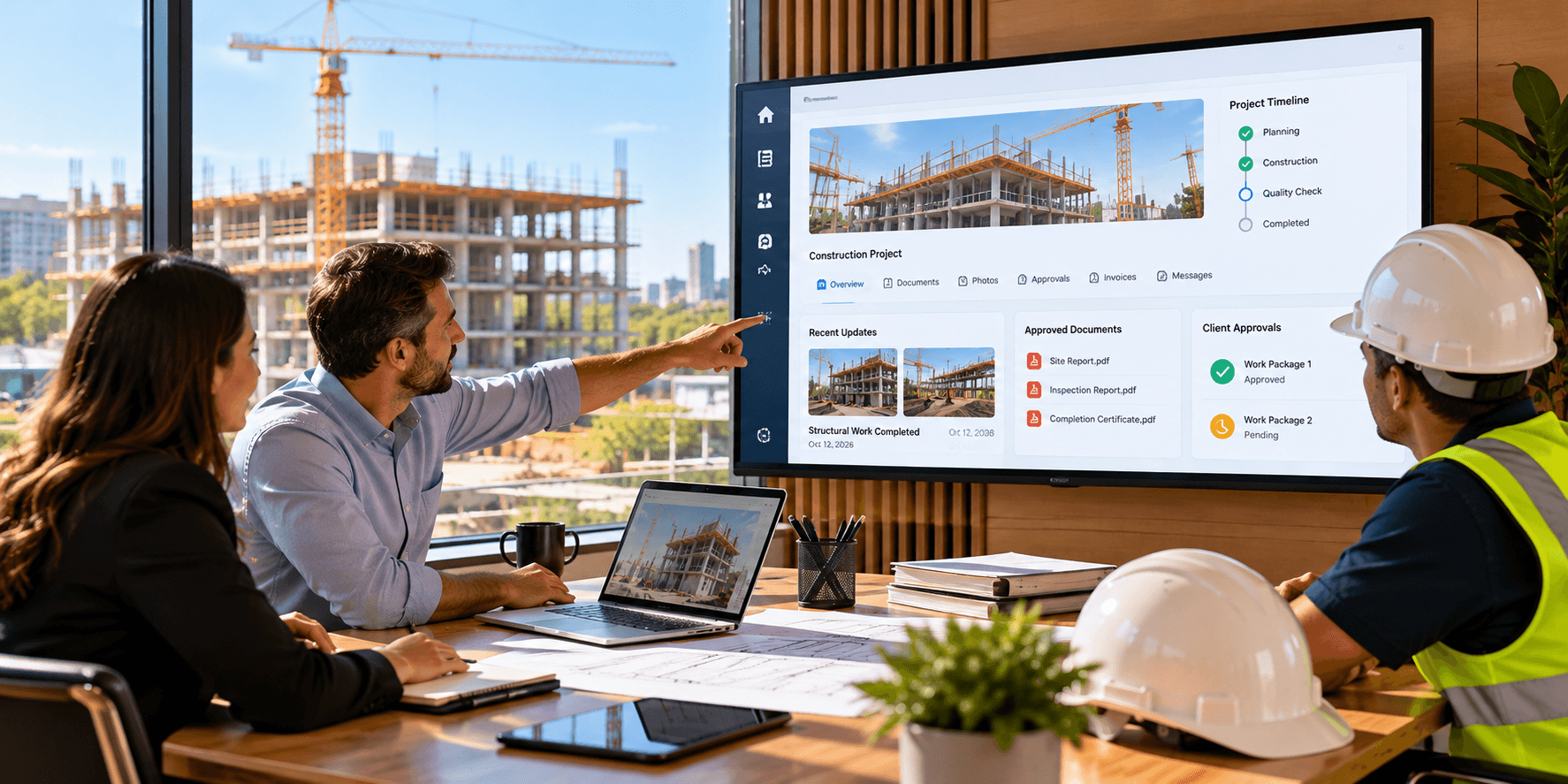
Better Visibility: Automated systems give managers an overview of how projects are progressing in real time. This is especially vital when it comes to managing several construction projects simultaneously.
Improved cross-team communication: Everyone in your organization will have access to information, eliminating unnecessary confusion.
Construction ERP Software such as Bouwflow brings all the benefits into one centralized system for better communication, automation, and visibility.
Core Impacts of Automation in the Construction Project Lifecycle
The impact of Automation is not limited to one stage. It improves the entire process workflow by making an impact on every single step, and makes things easier for everyone.
Planning and Scheduling: Scheduling can be done in many different ways, manually, but with automation, the entire process becomes easy. Furthermore, even if there is an occurrence of delay, then scheduling is automatically done by automation.
Resource Management: Labor, materials and equipment are crucial to any construction project. Automation ensures that the proper use of all the resources is maintained by making them available instantly.
Document Management: Many documents including contracts, invoices, and reports, are involved in construction projects. All documents are kept in one location and are automated. As a result, less time is spent looking for files.
Managing Budget & Finances: Real time spendings tracking and budget comparison are done by automated systems. This facilitates the early detection of cost overruns and streamlines procedures like construction invoicing, guaranteeing quicker payments and improved financial management.
Progress Monitoring: Automation offers real time progress tracking in place of manual updates. Without continual follow-ups, managers are able to see what has been finished and what is still waiting.
Cross team Communication: Automation uses a centralized system for all teams to communicate efficiently through one system making sure there are no communication gaps. This helps everyone to be working with the latest information, reducing misunderstandings.
Practical Ways To Introduce Automation In Construction
Implementing automation is not supposed to be a tough task. It can be done easily by correct steps.
Begin with Centralized Factory: All your project data will be stored and managed in one place using a centralized system to avoid any gaps.
Eliminating Repetitive Steps: Tasks like scheduling, reporting and billing should be kept in focus first to get automated.
Use Real Time Dashboard: Live Dashboards provide quick information on project progress and performance.
Train the Team: Make sure that all team members understand how to use the system at its best.
Bouwflow is designed to make this transition and introducing automation in construction workflow super easy for contractors.
Also Checkout: How to Evaluate Scheduling Software For the Construction Industry?
The Hidden Risks for not using Automation
Construction companies that rely on manual process only and don’t integrate automation in their process face risks like:
Delayed deliveries of projects
Miscommunication between teams
Difficulty in tracking finances
Losing important documents
Bad resource management
What to Expect from an Automated Construction System?
Selecting the right system for your construction project is a smart choice and long-term investment. Here are a few benefits you can count on with an automated construction system.
Industry-specific features: The system is supposed to be built specifically for construction workflows.
User Friendly: The software should be easy to access and use for the admin as well as the employee site.
Capabilities of Integration: It should connect easily with accounting and other tools.
Cloud Access: Cloud-based system allows you to get access from anywhere, which is important for a construction team working from different locations.
Scalability: The system should grow with your business and handle larger projects with time.
Conclusion
In construction project workflow software, automation is not an extra benefit anymore. It is something that should be there for sure. If you want to get your projects delivered on time without messing with your budget and accuracy, automation provides you with better control on every stage. By reducing manual work, the chances of human errors are reduced, and communication gets better with a centralized system for all teams. It sorts out many challenges fast and responds quickly to help in better decision-making.
If you want to improve your project’s efficiency and simplify your workflow, integrating automation in your workflow is going to be the best decision. Bouwflow provides a practical way to automate construction processes, manage projects with better clarity, and achieve stronger results across the complete construction lifecycle.