Construction businesses do much more than win new clients. They manage quotations, project documents, approvals, schedules, and daily site activities until the project is complete. A traditional CRM is built to help sales teams manage leads and close deals, but construction companies continue working with clients long after the contract is signed.
That is why many businesses mix a CRM with a cloud-based construction ERP to keep project information connected. Instead of focusing only on customer relationships, construction teams need a system that supports project delivery, communication, and operational workflows throughout the entire project lifecycle.
Why A Generic CRM Doesn't Fit Construction
Most CRM systems are built around a sales process. Their primary purpose is to help companies generate leads, manage opportunities, and enhance conversions. Once a deal is closed, the CRM has completed most of its work. Construction projects work differently.
Getting an order is just the first step. The main effort comes after signing the deal. Project managers, engineers, site superintendents, contractors, and administrative staff must always have access to project data for as long as the project continues.
The problem with most CRM systems is that they cannot cope with the extra burden construction firms face.
For example, construction teams regularly work with:
Project quotations
Contracts and approvals
Site updates
Project documentation
Daily operational activities
Client communication during project execution
Managing these activities through a traditional Sales CRM usually means depending on additional spreadsheets, emails, or separate applications. Many companies solve this challenge with construction CRM software designed specifically for project-driven businesses. As projects become larger, this creates disconnected information and unnecessary administrative work.
Construction companies often avoid these issues by using connected construction management systems such as Bouwflow. Rather than treating customer information separately from project activities. Bouwflow helps keep planning, documentation, quotations, and operational workflows connected throughout the project.
This creates a more practical approach for businesses whose work revolves around projects rather than sales pipelines.
Why A CRM Built For Job Sites Makes More Sense
A CRM designed for construction supports the entire project lifecycle rather than ending its role after a contract is signed. This makes it a better fit for companies that spend months managing projects instead of simply closing deals.
Consider how the two approaches differ in daily operations.
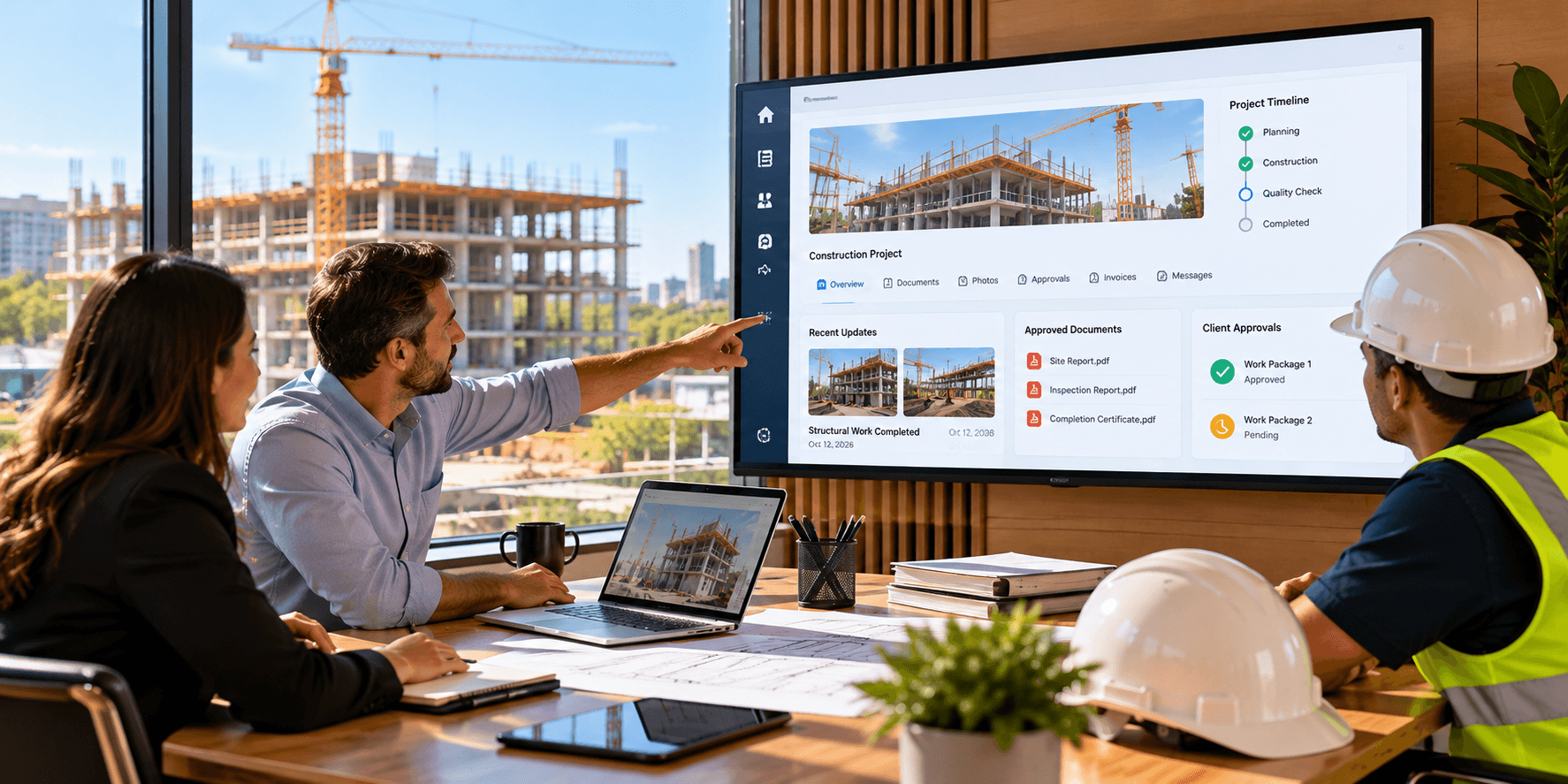
The major difference is how each system is used after a contract has been awarded. A sales CRM becomes less active because its primary objective has already been achieved. Construction companies, however, continue working with the client for weeks or even months. During this period, project teams need early access to quotations, approvals, drawings, contracts, schedules, and ongoing project updates.
This is where a construction project solution becomes far more practical. Instead of separating customer information from project activities, it keeps both connected throughout the project.
For instance, if a client requests a design revision, project managers should be able to view the original quotation, review project documents, update records, and communicate the approved changes without moving between multiple systems.
Management systems like Bouwflow are ideal for this method since they integrate project planning, documentation, quoting, and operations into one platform. This provides both the office staff and field staff with the same data for informed decision-making.
Construction businesses require systems that provide continued value even when the sale is completed. Job site CRMs are essential for project execution, whereas the traditional sales CRM is used for acquiring customers. This makes a big difference when it comes to executing projects.
How Construction ERP and CRM Work Together
A construction CRM and an ERP system are not competitors. They serve different purposes, but work best when they share the same project information. The CRM focuses on managing client relationships and project communication. It keeps track of enquiries, quotations, customer details, and ongoing communication before and during the project.
The ERP system manages the operational side of the business. It handles project planning, documentation, workflows, schedules, and other day-to-day activities that keep construction projects moving. When both systems work together, information flows more smoothly between office teams and job sites. This connected approach is similar to how ERP connects construction systems across multiple business functions.
This is one of the main reasons companies ask why to use cloud-based construction ERP alongside a construction CRM. Instead of maintaining separate records, teams can work with connected information throughout the project lifecycle.
Construction management systems such as Bouwflow support this connected approach by bringing planning, quotations, documentation, and operational workflows into one system. This reduces duplicate work, improves visibility, and helps project teams spend more time managing projects rather than searching for information.
Benefits of Connecting CRM with Construction Operations
A CRM becomes much more valuable when it is connected to daily construction activities instead of working as a standalone sales tool. This is where the benefits of implementing construction ERP become clear. Teams no longer have to move between separate systems to find the information they need.
Some of the major perks include:
Better project visibility – Project managers can view client information, project updates, and operational records without switching between multiple systems.
Faster access to information – Quotations, project documents, and approvals remain connected, helping teams find the right information quickly.
Improved team coordination – Office staff and site teams work with the same project data, reducing communication gaps and duplicate updates. Many companies achieve this through construction workflow ERP integration that keeps information synchronized across departments.
More organized documentation – Important project records are stored in one place, making them easier to manage throughout the project lifecycle.
Reduced administrative work – Teams spend less time updating multiple systems and more time focusing on project delivery.
Construction management systems such as Bouwflow support these connected workflows by bringing project planning, documentation, quotations, and operational activities together. This simply allows construction companies to manage client relationships while keeping every project organized from beginning to end.
What To Look For In A Construction CRM
Choosing a CRM for construction is different from choosing one for a sales business. The system should simply support project delivery as well as client relationships. This helps teams stay organized from the first enquiry to project completion.
Before making a decision, consider whether the system offers:
Project-based workflow – The CRM needs to be able to handle current projects, as opposed to just attracting customers.
Easy availability of project-related data – It should be easy for the teams to access quotations, drawings, approvals, and project history.
Mobile usability – It should allow the teams to have all of their information available on the go.
Integrated documentation – The contracts, drawings, quotations, and project history need to stay in order.
Integration into processes – The CRM needs to function in tandem with planning and daily routines, instead of working on its own.
Scalability – As the projects and teams expand, the CRM should keep being relevant to the business without creating additional complications.
Selecting the right construction project solution software is about choosing a system that shows how construction businesses actually operate. Construction management systems such as Bouwflow help achieve this by connecting client information with project planning, documentation, quotations, and operational workflows, giving teams one reliable source of project information.
The Final Thoughts
Construction companies need more than a CRM that tracks leads and sales opportunities. Once a contract is awarded, the focus shifts to planning, documentation, communication, and project execution. A system built for job sites supports these activities while keeping project information manageable from beginning to end.
This is why many contractors ask why use cloud-based construction ERP alongside a construction-focused CRM. The answer lies in keeping customer information, project records, and operational workflows connected instead of managing them through separate systems.
Construction management systems such as Bouwflow help bridge this gap by bringing project planning, quotations, documentation, and operational workflows together. With the increasing complexity of projects, an integrated approach to information management will assist businesses in improving coordination, visibility, and delivery of projects with confidence.
FAQs
Why doesn't a traditional CRM work well for construction companies?
The conventional CRMs are built for dealing with leads and sales. Construction firms need software that can deal not only with lead generation but also with project communication, documentation, and job site management once the contract is secured.
What is a construction CRM?
A construction CRM helps companies manage customer relationships while keeping project-related information manageable. It supports quotations, client communication, project records, and ongoing collaboration throughout the construction lifecycle.
Can a construction CRM work together with an ERP system?
Yes. Construction CRM focuses on customer relations, whereas ERP focuses on planning, scheduling, documentation, and other operations. In combination, these software solutions result in a more integrated and efficient process.
Why should construction businesses use a cloud-based ERP?
One of the questions commonly asked by many businesses is Why Use Cloud-Based Construction ERP. The reason lies in the fact that in construction, many people work remotely; therefore, there must be a means of providing them with up-to-date project information.
What are the benefits of implementing construction ERP?
Advantages of installing construction ERP include increased visibility of projects, document management, better teamwork coordination, fast availability of information, and well-managed operational workflow.
What should businesses look for in Construction Project Solution Software?
The best features that businesses can expect from Construction Project Solution Software include project-based workflow, document management, mobile accessibility, coordination, and availability of information on projects without being difficult to scale.
How does Bouwflow support construction companies?
Bouwflow is a connected construction management system designed to help businesses with the management of planning, quotations, project documents, and operational workflow.