Digital signatures use encryption technology to verify signers' identities and protect document content from unauthorized changes. The procedure reduces paperwork needs while it increases security and enables faster approval times because multiple businesses can work together from different sites.In real estate construction, contracts, approvals, and compliance documents flow through numerous stakeholders: developers, construction general contractors, subcontractors, property owners, regulators, and financing partners.
Traditionally, complicated documentation splits data across tools and files, hinders processes, and raises risk. Digital signature is therefore more than just a convenience in the real estate building industry. It's a tactical benefit.
Digital signatures enable teams working on residential and commercial projects to finish agreements more quickly, keep safe records, and remove human bottlenecks.
In this blog, we’ll examine how digital signing elevates construction operations, showcases real use cases, and highlights how an integrated solution like Bouwflow centralizes contract execution within your broader workflows.
What is Digital Signing in Real Estate Construction?
The digital signing procedure enables stakeholders in real estate construction to sign contracts and documents through electronic signatures. The technology enables developers, contractors, architects, and clients to sign documents through secure online methods instead of requiring in-person signatures.
To maximize efficiency, many companies choose to implement an ERP system in real estate business operations, allowing digital signing to integrate seamlessly with project management, financial tracking, and document workflows.
Why is Digital Signing Important in Real Estate Development?
The construction process needs both prompt decision-making and complete record-keeping for its successful operation. Digital signatures provide the following benefits to users:
Speed & Agility: Everything is slowed down by paper contracts. Digital signature helps teams meet project deadlines by speeding up turnaround from days or weeks to minutes.
Security & Compliance: Digital signatures use encrypted credentials and audit trails that validate signer identity and integrity—critical when documents may be legally enforceable.
Decreased Error Risk: Manual signatures promote missing pages, outdated updates, and misplaced files. Digital signatures standardize document versions and document tamper-proof authentication.
Reduced Costs & Overhead: Projects become more economical and ecologically friendly when printing, scanning, courier fees, and manual filing are eliminated.
As businesses continue automating real estate project processes, digital signing becomes a key component in reducing delays and ensuring smooth coordination across teams and stakeholders.
Digital Signing for Construction Documents: Core 4 Use Cases
1. Contract Execution and Subcontractor Agreements
The foundation of each building project is a contract. Digital signature streamlines execution without the hassle of face-to-face meetings or courier logistics, whether it's for prime contracts with owners or subcontracts with specialty trades.
Digital signing for construction documents guarantees that agreements are finished on schedule and safely recorded, whether you're hiring an HVAC contractor or completing a roofing subcontract. In multi-party procedures where every signature counts toward budget release or compliance, this becomes quite useful.
2. Change Orders & Variations
Change orders—updates to scope, price, or schedule—can derail timelines when signatures are delayed. With digital signatures, teams collect approvals digitally, instantly updating project records.
For example:
A general contractor issues a scope change via a digital document.
Subcontractors receive and sign online on their phones or laptops.
Finance and project teams gain immediate visibility and enforceability.
Leveraging digital contract signing software keeps everyone aligned and reduces the risks of disputes caused by outdated paperwork.
3. Permits, Compliance, and Legal Documents
Construction compliance involves licenses, regulatory filings, safety documentation, and more. Delays in signatures on compliance documents can push approval timelines out, impacting mobilization and deadlines.
E-signature workflows ensure all required permits and regulatory compliance forms are signed digitally and stored securely, maintaining audit trails and legal defensibility throughout the project life cycle.
4. Real Estate Sales, Lease Agreements, and Handover
Construction teams increasingly overlap with real estate sales and asset management. At project closeout, real estate brokers and developers need a fast way to sign lease contracts, sales agreements, title documents, and occupancy certificates.
Digital document signing for real estate projects speeds transaction closure, increases client satisfaction, and enhances transparency in project handover.
Digital Signature Software for Real Estate and Construction: Impact on Workflow
Integrating digital signature technology within operational systems transforms how companies manage documents end-to-end. These platforms typically include features such as:
Automated signature routing
Audit trails with timestamps
Status tracking and reminders
Secure cloud storage
Multi-device support
For real estate construction teams, this means fewer administrative tasks, reduced risk, and faster financial cycles.
Integrated Value With Bouwflow
As an all-in-one construction ERP software, Bouwflow brings digital signing directly into your core business platform. Instead of handling documents in a separate tool, Bouwflow integrates digital signing into a unified system that supports planning, construction cost estimation, invoicing, supplier management, and project execution. Here’s how Bouwflow enhances digital signing workflows:
1. Seamless Document Generation & Signing
Create quotes, proposals, contracts, and agreements within Bouwflow and send them for digital signature in seconds. By embedding signing capabilities into your workflow, you avoid context switching and accelerate the document lifecycle from creation to execution.
2. Real-Time Tracking & Accountability
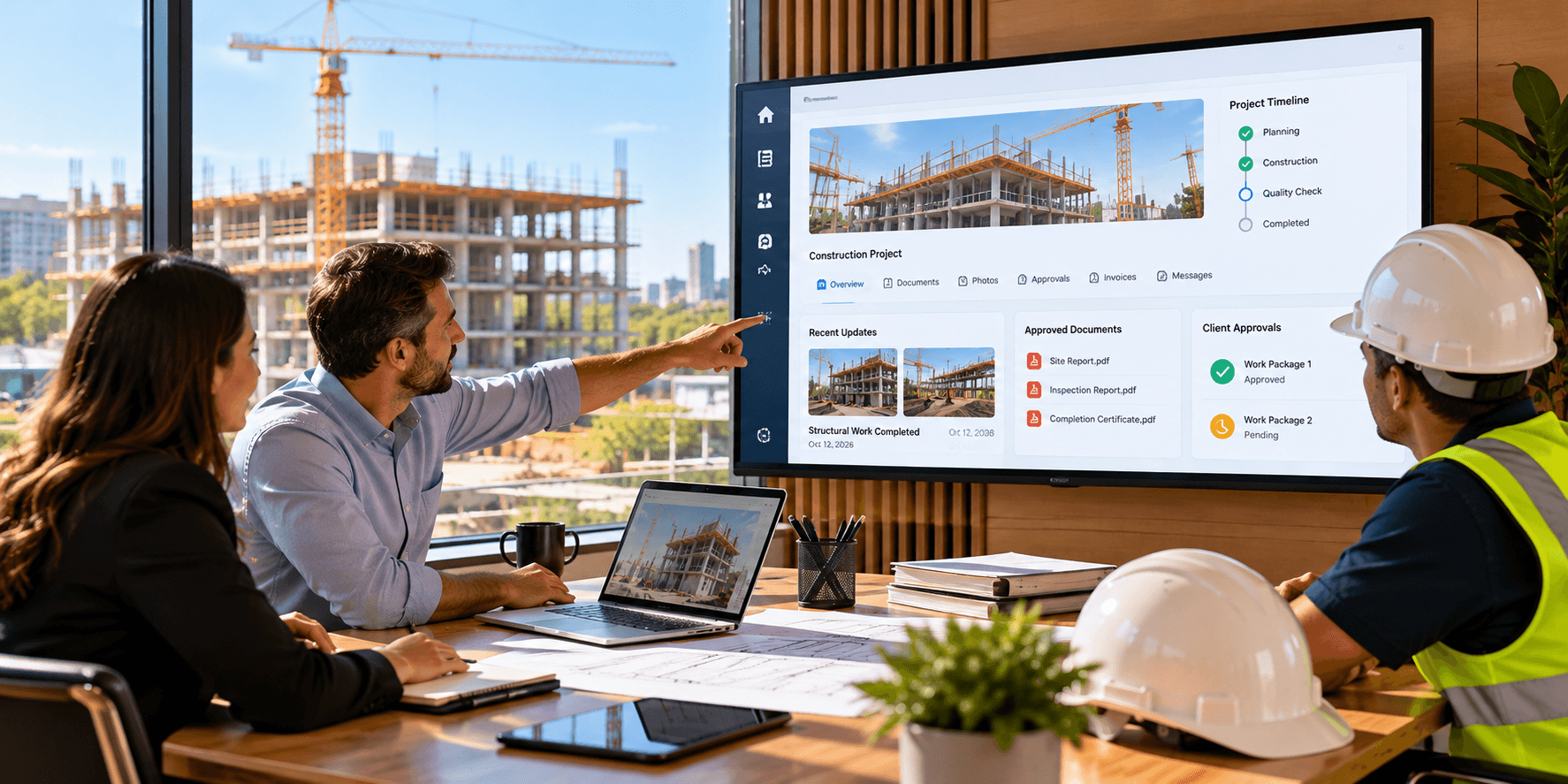
Bouwflow provides real-time status updates on signature progress. Project managers and finance teams can see immediately when documents are signed, pending, or completed, reducing follow-up work and ambiguity.
3. Centralization of Project & Contract Data
Instead of fragmented folders and cloud drives, Bouwflow stores signed documents alongside project financials, work orders, and supplier records. This strengthens compliance, improves audit readiness, and boosts operational transparency.
4. Enhanced Collaboration Across Teams
Field, office, and executive stakeholders work off the same platform. Digital signatures become part of a seamless workflow extending from construction pre-calculation through contract execution to project closeout and invoicing.
By adopting Bouwflow as your construction project management software and ERP foundation, you gain an integrated digital signature environment that supports growth and scalability.
Digital Signing in Real Estate Construction: Strategic Benefits
Let’s tie the use cases back to business goals that matter most:
Accelerated Deal Velocity: Faster contract turnarounds boost project starts, reduce idle time on resources, and improve cash flow.
Stronger Legal & Compliance Posture: Audit trails and encrypted signatures increase confidence with clients, regulators, and partners.
Cost Optimization: Reduced administrative costs and paper overhead lead to measurable savings.
Higher Stakeholder Satisfaction: Clients and partners appreciate frictionless signing experiences that respect their time and convenience.
Across both real estate and construction functions, digital signing redefines efficiency and creates competitive advantage, especially when integrated into a larger, modern platform like Bouwflow.
Choosing the Right Digital Signature Strategy for Construction
As companies scale, the digital signature solution should:
Support mobile and remote signing
Preserve legal enforceability
Integrate with core operational systems
Offer audit trails and security controls
Platforms that stand alone can accelerate signing, but often don’t connect signing data back to commercial and operational systems. With Bouwflow, digital signatures become part of an end-to-end construction solution—reducing silos and providing connected, real-time business intelligence.
Final Thought
Digital signing has shifted from optional convenience to a core enabler of productivity, compliance, and operational control in real estate construction. From contract execution to compliance, from subcontractor onboarding to project closeout, digital signatures strengthen speed, accuracy, and accountability.
By incorporating digital signing within an integrated construction ERP software like Bouwflow, companies unlock unified workflows that fuel better outcomes, higher margins, and scalable growth. If your business still treats signatures as a paper-based chore, it’s time to rethink your strategy and embrace a centralized, secure, and efficient system built for the demands of modern construction.