Every successful construction project starts with a plan and ends with a completed building. Between these two points, various important steps must be done in the right manner. Missing one step or rushing through it can lead to delays, higher costs, and unnecessary issues.
Understanding the stages of a construction project helps contractors, project managers, and business owners stay on track from beginning to end. Each stage has a different purpose, but together they keep the project moving forward.
In this guide, you will learn what happens during every stage and how a construction management system like Bouwflow helps teams stay on track throughout the project.
What Are the Construction Project Stages?
Every construction project follows a planned process instead of starting work immediately. Prior to laying the first brick, the teams should make plans regarding the design, get necessary approvals, source materials, and arrange for resources. After completion of the construction phase, tests have to be carried out on the structure before handing it over.
These construction project stages create a clear roadmap for everyone involved in the project. They help teams understand what needs to be completed before moving to the next step, reducing confusion and keeping work managed.
The six stages include:
Conception and Design
Permits and Preconstruction
Procurement
Construction
Commissioning
Post-Construction
Managing each stage carefully helps reduce delays and keeps projects moving according to plan.
Stage 1: Conception & Design
Every successful project begins with a clear idea. The stage is about determining what needs to be built, how it should look, and whether the project is possible within the available budget and timeline.
The design process is a collaboration between the project owner, architects, engineers, and other parties. Proper time spent at this stage ensures that there will be no costly modifications in the future.
During this stage, the team usually focuses on:
Defining the project goals and needs.
Checking whether the project is practical and financially possible.
Preparing the first design drawings and layouts.
Creating an estimated budget
Setting an initial project timeline
This stage is also the right time to identify possible risks. For instance, the team may review site conditions, local regulations, or material availability before making the final decisions.
Good planning during this phase simply makes the remaining project stages in construction much easier to manage. When everyone understands the project’s goals from the beginning, there is less confusion during construction.
Many construction companies use a construction management system like Bouwflow to keep early project documents, drawings, budgets, and team discussions organized in one place. Having this information available from the beginning helps every team member work from the same project plan.
Stage 2: Permits & Reconstruction
After the design gets approval, the next phase of the project is the preparation phase. Before beginning construction, all legal and site considerations must be taken care of. Failure to do so may cause delays, fines, or suspension of work.
The primary objective is to ensure that all preparations are made prior to commencing work at the site. The team generally:
Apply for building permits and approvals.
Check local building codes and safety rules.
Inspect and prepare the construction site.
Finalize contractors and subcontractors.
Create a detailed work schedule.
Plan site safety measures.
This stage also provides project managers a chance to solve problems before construction starts. If the permits prove to be slower or require more time than anticipated, or the construction site requires further preparation, then this can easily be done in advance rather than creating any delays at a later stage.
These preparations make the remaining construction project management stages much smoother. Workers can start with clear instructions, approved documents, and a site that is ready for construction.
Construction management software like Bouwflow assists in organizing all the permits, project documents, scheduling, and roles of team members at once. Using construction project management software helps teams keep permits, schedules, and project responsibilities organized throughout the preconstruction phase. It helps in keeping all approvals in check and helps in not missing anything for the next phase.
Stage 3: Procurement
Procurement follows after planning and obtaining all necessary approvals have been done. It is during procurement that all materials necessary for construction are acquired prior to the commencement of actual construction. Late deliveries of materials will just delay the whole process; therefore, it needs proper planning.
The procurement department works together with suppliers and project managers. Many contractors use construction supplier management software to track supplier information, purchase orders, and delivery schedules more efficiently.
This stage usually includes:
Ordering construction materials.
Hiring subcontractors when required.
Arranging machinery and equipment.
Comparing supplier prices and delivery times.
Confirming delivery schedules.
Tracking purchase orders.
Effective procurement is not merely purchasing materials at a reduced cost. It involves ensuring that the correct materials get delivered to the correct construction site at the right time. Late delivery of steel, concrete, and equipment can result in labour charges and delays.
These construction project stages rely on each other. A delay during procurement often affects the construction stage because workers cannot continue without the needed resources.
Examples of construction management systems include Bouwflow, which helps businesses to compile all the data about purchases, suppliers, project plans, and other paperwork in one database, allowing project managers to have more control over their projects and see clearly everything that is required to be done before the start of the project.
Stage 4: Construction
This is the stage where the project starts taking its shape. Once the site is prepared and materials are available, construction work starts. It is also the longest stage because most of the physical work happens only here.
Every activity must follow the approved drawings, safety rules, and project schedule. Good coordination is crucial because various teams often work on the site at the same time.
Work carried out during this stage may involve:
Site excavation and foundation work.
Structural framing.
Roofing and exterior work.
Plumbing and electrical installation.
Heating, ventilation, and air conditioning (HVAC).
Interior finishing, painting, and flooring.
Regular quality and safety inspections.
Ensuring that the project runs according to the schedule is probably one of the best tests during this stage. Changes in weather conditions, lack of materials, or even any other unanticipated situations on-site can impact the day-to-day tasks.
These stages in a construction project need constant communication between the office and the job site.Many contractors improve collaboration through digital workflow automation construction practices that connect office and field operations. Everyone must work with the latest project information so that change can be managed without disrupting the schedule.
Construction management systems such as Bouwflow assist teams in managing daily progress, project documents, workforce schedules, and site updates from one place. This allows project managers to track ongoing work, keep teams aligned, and make informed decisions throughout the construction stage.
Stage 5: Commissioning
Construction may be complete, but the project is not ready for delivery yet. Every major system must be tested to ensure it works safely and performs as expected. This stage is known as commissioning.
The purpose of commissioning is to find and fix any issues before the building is occupied. Solving these issues is much easier than fixing them after the owner has moved in.
During this stage, the team checks:
Electrical systems.
Plumbing systems.
HVAC equipment.
Fire safety systems.
Lighting and emergency systems.
Building controls and other installed equipment.
If a system doesn’t perform correctly, it is repaired and tested again until it meets the standard requirements. The team also confirms that the completed task matches the approved design and project requirements.
Although this stage may seem small, it plays a crucial role in the construction project management stages. Proper testing helps prevent future maintenance issues and gives the owner confidence that the building is ready for use.
Construction management systems such as Bouwflow help teams keep inspection reports, testing records, and project documents managed in one place. This makes it simpler to track completed checks and prepare for the final delivery.
Stage 6: Post-Construction
The project doesn’t end when the building construction is done. Before it is officially handed over, the team must complete a few final tasks. This stage ensures the owner receives a building that is ready to use.
The focus is on reviewing the completed work, fixing any remaining problems, and completing the needed documentation.
This stage usually involves:
Performing the final site inspection.
Preparation of the snag list/punch list of small defects.
Finishing the outstanding repairs/rectifications.
Transfer of project documentation & warranties.
Supplying manuals for operation and maintenance.
Formal transfer of the project to the client.
This final stage allows the owner to inspect the building and confirm that everything meets the agreed requirements. Once all outstanding items have been completed, the project can be formally closed.
The final project stages in construction are just as crucial as the first ones. A smooth handover improves client satisfaction and helps build trust for future projects.
Learn More About This: Critical Path In Project Management
Management tools such as Bouwflow enable documentation of all closeout documents, inspections, warranties, and handovers in one location. This facilitates easy management of the final phase and ensures that vital information regarding the project is retained even after completion of the construction process.
How Construction Management Systems Help Throughout Every Stage
Handling all 6 stages separately can become tough, especially when multiple projects are running at the same time. Drawings, schedules, permits, purchase orders, and site updates can quickly become scattered across emails, spreadsheets, and paper files.
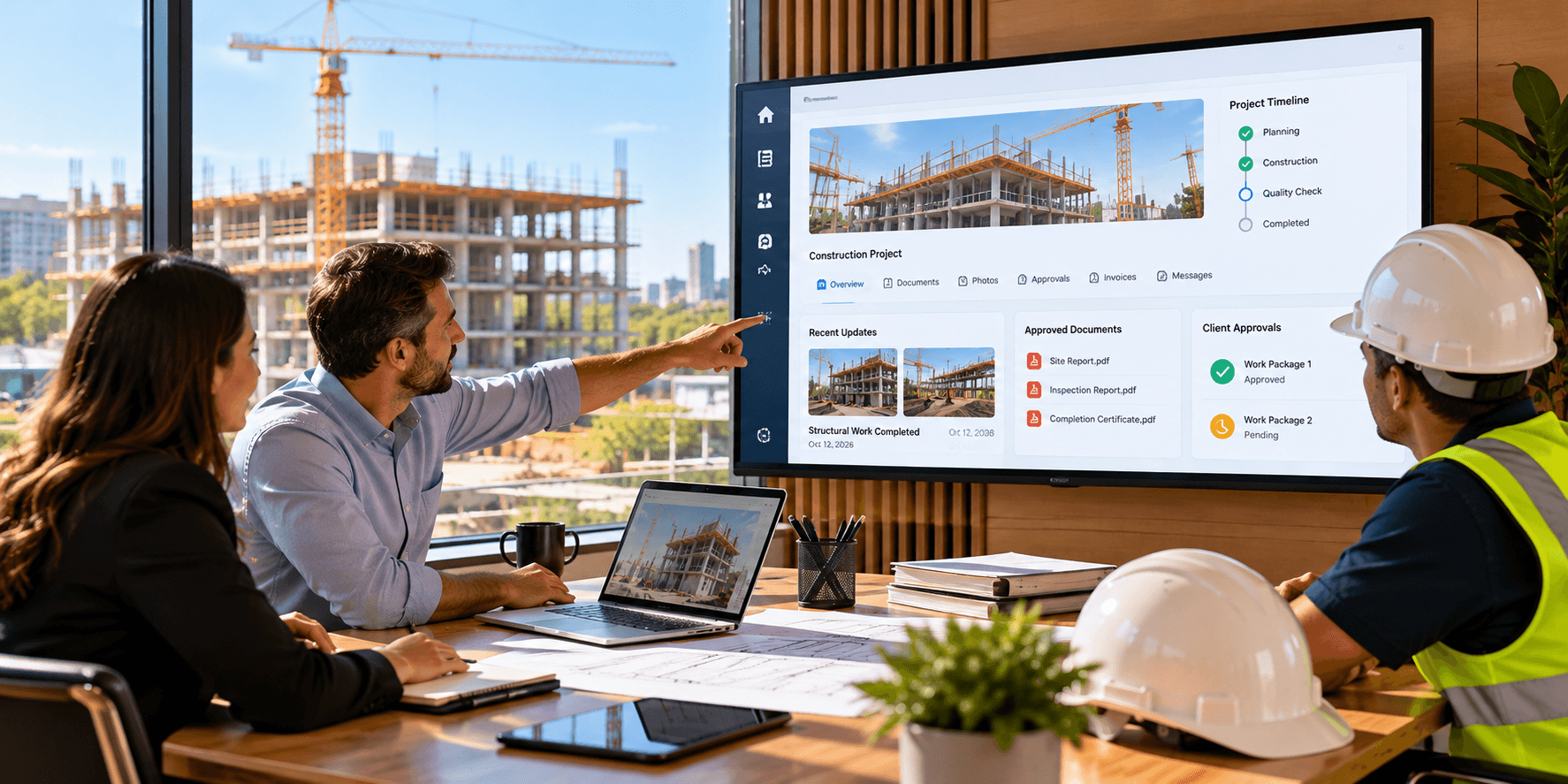
A construction management system helps keep everything connected from the start of the project until the final handover.
Here’s how it supports each stage:
Managing all stages of a construction project becomes much easier when every team works with the same information. Project managers do not have to look for various documents or wait for new documents since they will be able to get all the documents that are needed for making decisions.
Construction management solutions like Bouwflow offer assistance at any stage of a project. managing multiple projects often rely on tools designed to manage multiple construction projects more efficiently. This application connects planning, document management, procurement, labor management, and project documentation, and assists construction companies at all stages of their work.
Conclusion
To conclude this, every construction project follows a clear path, and each stage plays a crucial role in the final outcome. Completing on stage properly makes the next one easier to manage and reduces the risk of delays and extra expense. Using a construction management system such as Bouwflow helps keep documents, schedules, and project information organized throughout the entire project
With better planning and coordination, construction teams can complete projects more efficiently while delivering a better experience for clients.
FAQs
What are the six stages of a construction project?
The six construction project stages are Conception and Design, Permitting and Pre-Construction, Procurement, Construction, Commissioning, and Post-Construction. Each construction project stage has its own objectives and helps prepare the project for the next stage.
Why is the planning stage necessary in the construction process?
Planning plays a vital role in determining the scope of work, cost estimates, and project time frame.
Which stage usually takes the longest?
The construction stage consumes the most time since it involves site work, structure creation, utilities installation, inspection, and interior decoration until it becomes fit for testing.
How does a construction management system help during a project?
The construction management system maintains the schedules, documentation of the project, workforce data, and updates on a day-to-day basis. It ensures the process of organization and communication in the project is done smoothly.
How does Bouwflow support construction project management?
Bouwflow is a construction management system that helps business organizations manage planning, documentation, procurement, coordination of the workforce, and documentation of the entire project in an integrated manner.