Are you still using paper-based methods to update your sites? Are you manually doing everything for invoicing, approvals, project details, etc.? Well, if you are, your business is investing much time in managing activities rather than doing them.
While initially it seems like it can be controlled, as construction businesses grow, the manual way of doing things begins to cause problems. Inefficiencies, missing information, and a lack of communication are the norm. This is why many companies are turning towards construction ERP systems.
But going digital is not just about using software- it is about changing how your business works. This guide will walk you through easy and practical steps that help you digitize your construction company the right way.
Importance of Digitization in Construction Companies
Construction projects require many teams, schedules, and coordination. The slightest delay in such projects done manually could disrupt the whole process.
It becomes harder to monitor progress, manage documentation, and deal with financial matters without technology-based systems. Additionally, there is a possibility that mistakes will be made when manual data entry takes place in various locations.
With technology, businesses can ensure precision, conserve time, and maintain connectivity, among other benefits. This makes work much easier to manage.
Step-by-Step Process to Digitize Your Construction Business
Digitization should be done step by step. Instead of changing everything at once, it is better to enhance one process at a time. This makes the transition smoother and easier for your team.
Step 1: Review Your Current Workflows
Let’s begin by understanding how your current system works. Simply, you need to look at how these tasks are managed, how updates are shared, and how documents are stored.
You may simply notice that the processes of doing all these things take longer than expected. For example, approvals might be delayed, or teams may not have access to updated and fresh information. These are the gaps that show the need for digitization.
Once you address these areas, it becomes simple and quick to decide what needs improvement. This step ensures that you do not just adopt technology, but actually solve the real-time issues.
Step 2: Replace Paper-Based Documentation
Manual processes are one of the leading causes of construction delay. Documentation can easily get lost, the approval process can take a while, and there is no easy way to track updates.
With the help of digital documentation software, you can store every important paper at one location. The entire team can access it easily, which makes it less chaotic for everyone, and they can stay connected with the current updates.
Not only this, but it also becomes easy to edit and share documents instantly whenever needed. There will always be access to the most recent copy of the document at any point.
Step 3: Speed Up Approvals and Digital Signatures
Approvals are the most important part of construction workflows, but manual signatures often slow things down. When there is a need to sign the documents physically, delays are common.
By using construction digital signature software, approvals can be completed faster, even if teams are in different locations. This assists projects in moving forward without unnecessary waiting time.
In addition, digital signs keep records managed. Every signed document is stored safely, making it simple to track approvals when needed.
Step 4: Automate Your Invoicing Process
There is also the issue of billing, which is one that is common among many construction firms. Manually issued invoices cause mistakes and delayed payments.
However, digital invoicing systems designed for the construction sector eliminate these challenges by ensuring that bills are created automatically and sent almost immediately.
Through this approach, payments will be faster and more reliable. It is possible to eliminate any chances of misunderstandings arising from billing issues.
Step 5: Connect All Processes With ERP Systems
After digitizing individual tasks, the next step is to bring everything at one place. Using separate tools can still create confusion if they are not aligned. This is where construction ERP systems become crucial. They merge project management, financial tracking, and operational workflows into one system.
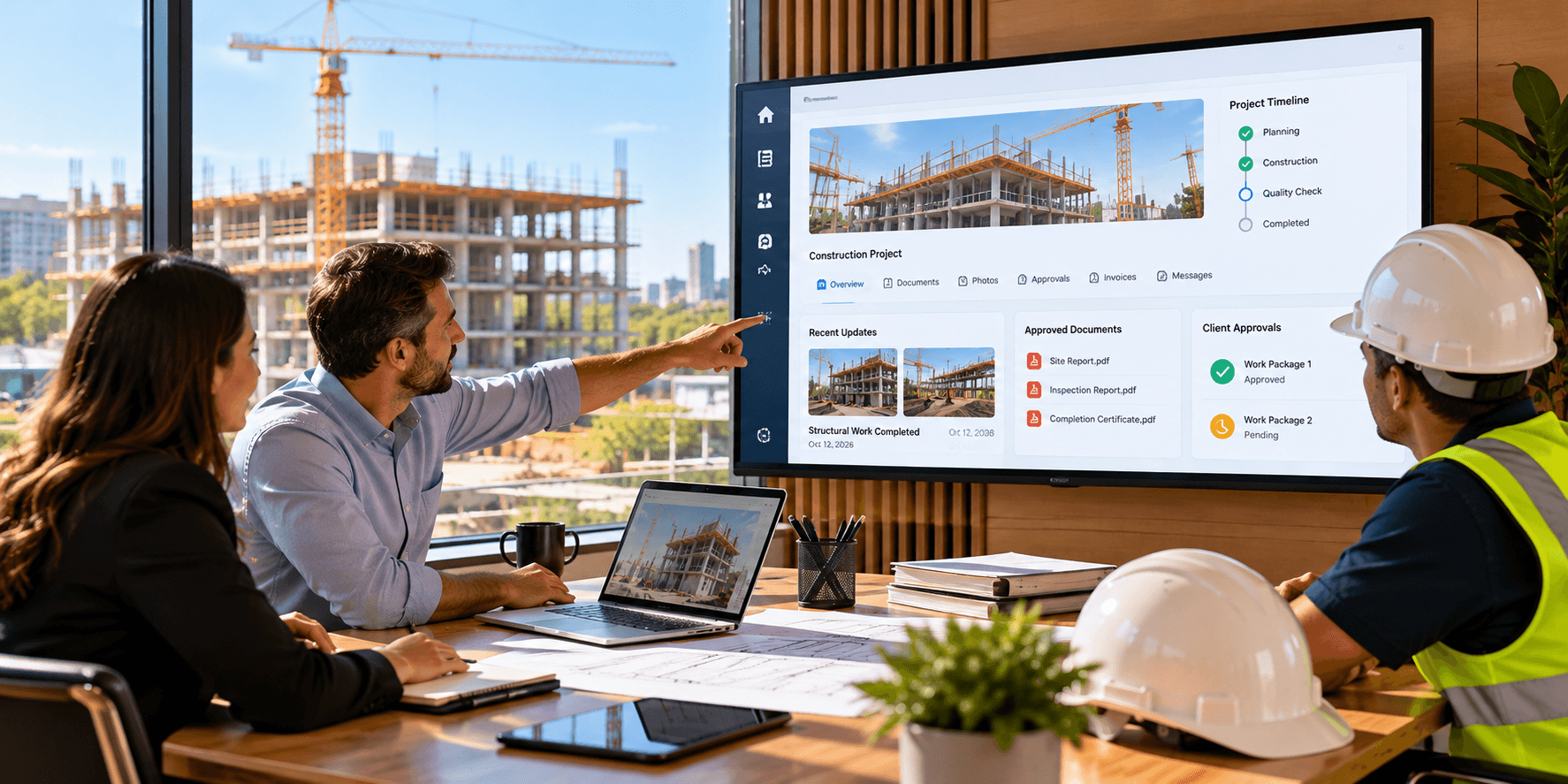
Software systems like Bouwflow allow construction companies to manage all processes from a single dashboard. This reduces manual work and ensures that all teams use the same data.
Step 6: Improve Coordination With Real-Time Data
Digitization does not only entail storing information but rather making good use of it. When your systems are all integrated, you get to experience the advantages that come from having timely data on hand. You can then make sure that all parties involved are up-to-date.
If the same data is accessible to everyone, then communication would be more streamlined. For instance, the site team can report their progress while the office team can keep track of their performance.
This is especially helpful for companies managing multiple projects. After all, better coordination leads to smoother execution. You can explore how better coordination works here: How to Successfully Manage Multiple Construction Projects at Once
Step 7: Train Your Team for Digital Adoption
It goes without saying that the adoption of any new system will be useless if the team is unfamiliar with its implementation. Therefore, training is one of the key steps in the process of digitizing the organization.
First of all, start introducing tools step by step. Teach your team how the system facilitates their work processes. Gradually, employees will adapt to using digital solutions in their workflow.
Also, ensure the systematic application of digitization. When there is a unified approach, the advantages of this process become obvious.
Step 8: Monitor and Improve Your Processes
Digitization is not a process that can be considered completed once you implement all the required tools. Therefore, it is necessary to monitor the effectiveness of this process.
For example, measure time savings, error reduction, and project management efficiency. In other words, identify how efficient digitization has proven to be in practice.
Accordingly, based on this data, you can implement further changes and optimizations.
Also Checkout: 10 Must-Have Features in Construction Project Management Software
Common Mistakes to Avoid During Digitization
While digitizing your business, some errors can slow down progress. Avoiding them can make the transition smoother.
One common mistake is trying to change everything at once. This can simply overwhelm your team and lead to confusion. Instead, pay attention to gradual improvements.
Another major mistake is using too many separate tools. Without integration, this can create the same issue as manual systems. It is better to use connected solutions that work together.
Final Thoughts
Getting your construction firm digitalized is a way towards achieving more control and efficiency. This can be done by taking advantage of the construction ERP system to get everything streamlined into a single system and minimize manual processes.
Once you are determined to make your workflow simpler, you will find tools such as Bouwflow as a solution to help you achieve this goal. Do things gradually and consistently to create a system for your future success.