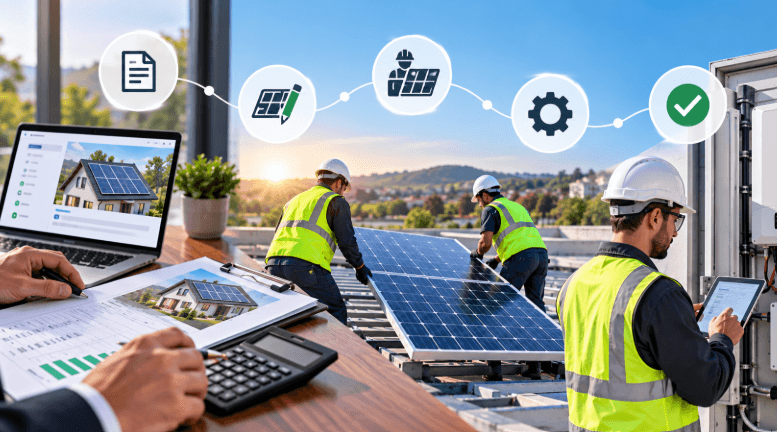
Have you also wondered about the same thing that your project is moving, but you still don’t know exactly what’s happening on-site?
This is a common issue for solar panel installers. Projects span multiple locations; teams work separately, and updates don’t always arrive on time. As a result, even simple delays can turn into severe issues.
In fact, according to the International Energy Agency, the solar industry is growing rapidly, but most projects still face delays due to planning and coordination gaps. This highlights that tracking is not just crucial- it’s necessary.
That’s where construction ERP software comes in. It helps bring everything into one system so teams can track projects clearly and work without confusion. In this blog, we will break down why tracking becomes tough in solar projects and how ERP helps installers manage everything better.
Why Tracking Solar Projects Becomes Difficult
Solar installation projects include many moving parts. From site inspections to final installation, every step relies on proper coordination. However, without the correct system, tracking all this becomes tough.
First, the majority of solar firms operate with several sites concurrently. Staff members are located in various places, and communication relies on telephone or text messages. As such, obtaining an overview becomes increasingly difficult and elusive.
In addition, project timelines frequently change because of unpredictable weather, permit considerations, or late deliveries. If these changes are not discussed effectively, team members will not get any updates about the revised timelines and may proceed with their tasks based on old information.
Another major challenge is tracking materials and progress together. If materials are not available for the sport, work stops, leading to delays. But if usage is not recorded, it becomes difficult to understand what is needed next.
Due to these issues, poor tracking creates real issues. Projects get delayed, teams face confusion, and expenses start increasing without clear visibility. Over time, this affects both project quality and business performance.
How ERP Software Improves Project Visibility
To solve these challenges, businesses need better visibility. This simply means having clear and updated information about every part of the project. This is where ERP systems play a crucial role.
With construction ERP software, all project data is stored in one place. Teams don’t need to check various tools or ask multiple people for updates. Everything is available in a single system.
Here are a few perks you need to know:
Real-Time Updates: With the help of the system, it gets updated immediately, no matter wherever changes occur. These supports maintaining a connection between members and ensure that you don’t work on outdated data.
Tracking Tasks and Timelines Clearly: With the help of ERP, one can easily track their tasks. They will know which tasks are finished and which are left.
Systems like Bouwflow are designed to support this level of visibility, making project tracking easier and more reliable.
Also Checkout: How to Create a Solar Installation Plan & Accurate Quotation?
Managing Daily Solar Operations with ERP
Day-to-day operations in solar projects need constant coordination. Without a proper system, even minor tasks can become tough to manage. An RP system helps simplify this process.
It allows teams to monitor installation progress in real time. Managers don’t need to wait for updates- they can check the progress directly in the system.
It also enhances coordination between teams across locations. Whether teams are on-site or in the office, everyone works with the same data. This reduces confusion and improves communication.
Adding now, ERP helps in managing materials and equipment efficiently. Teams can track availability, usage, and needs without manual effort. This ensures that work continues without interruptions.
Improving Cost Control Through Better Tracking
Tracking is not just about progress; it also affects costs. When project data is not connected, it becomes tough to manage budgets. Minor mistakes or delays can increase expenses without anyone noticing.
With ERP systems, project data is linked with construction financial management software. This means businesses can see how much they are spending and where they are spending.
It also helps in identifying delays and extra expenses early. Instead of reacting later. Teams can take action at the right time. This improves decision-making. Managers can plan better, control costs, and avoid unnecessary losses.
Why Solar Installers Are Choosing ERP Systems
The sector is expanding quickly, and with an increased number of projects being executed by firms, there will be challenges when trying to handle everything alone. This is why many firms are now adopting ERP construction softwares for solar panel installers to remain efficient.
Better Coordination Across Teams
Since various projects are occurring simultaneously, it is important for the firm to have a system that ensures cohesion among the teams. This is where ERP comes in handy.
Handling Higher Project Volume
As the number of projects increases, so does the amount of data and tasks. ERP systems help manage this growing workload in a structured way without creating chaos.
Real-Time Access to Information
Teams no longer want to wait for updates or reports. ERP offers instant access to project data, helping teams make quicker and better decisions.
More Organized Way of Working
Rather than using a variety of software for individual processes, ERP consolidates them all in one platform. It simplifies operations.
Systems like Bouwflow have been designed to meet the above needs and enable better organization within solar business operations.
How to Choose the Right ERP System
Choosing the right ERP system is crucial for long-term success. Not all systems are designed for construction or solar projects.
User-Friendly System: Firstly, the system should be user-friendly. It should not pose any complications for teams in learning and using it. The system that is too complex could raise further issues rather than solve them.
Scalability and Flexibility: With the growth of the company, it should become easier to incorporate new projects into it without any problems.
Connect All Process Segments: From planning to implementation and budgeting, all the process segments should seamlessly integrate into one whole.
Systems like Bouwflow are designed with these needs in mind, making them suitable for construction and solar installation businesses.
Read Also: 5 Software For Solar Installation Companies
Conclusion
To conclude this blog, tracking solar projects should not feel confusing or stressful. When everything is connected and visible, teams can work with confidence and control.
With construction ERP software, solar installers can move away from scattered processes and manage projects in a smarter way. Bouwflow supports this change by helping companies bring clarity, improve coordination, and handle growing project demands without losing control.
So, if you are looking for better visibility and smoother project execution, this is the right time to move forward with a more connected system.
FAQs
Why do solar installers need project tracking?
It will help to keep projects on track, optimize resource allocation, and keep everyone in sync.
Is ERP software complex to work with for small teams?
No, most contemporary ERP solutions have a user-friendly interface. This makes them easy to use even with small teams.
Why does ERP become a better choice than other alternatives?
ERP collects all data in one place and prevents any misconceptions or misunderstandings.
Can the ERP system handle multiple solar energy projects at a single time?
Yes, the ERP system can handle multiple projects at once. This also can provide an overview of each project.