As 2026 draws to a close and the construction industry prepares to enter 2027, many of the challenges facing construction companies are expected to remain unchanged. Finding and retaining skilled labour, managing rising material and operational costs, and meeting clients’ expectations for on-time, on-budget project delivery will continue to be major concerns.
Further, with the integration of next-gen tech solutions, the contractors are handling more information, tighter coordination requirements, and growing expectations around productivity.
All these construction management challenges are connected.
The shortage of skilled workers can delay construction activities. A delay can affect subcontractors, material deliveries, and project costs. Additionally, if the project manager does not have accurate information about site progress and spending, it becomes harder to respond before the problem grows.
These are some of the biggest construction management challenges for businesses in 2027. Let’s discuss more construction management challenges in detail.
Key Takeaways
Skilled labour shortages: Finding and retaining experienced workers makes workforce planning and task allocation more difficult.
Rising material and operating costs: Contractors need to monitor purchasing, supplier prices, labour expenses, and project budgets to protect profitability.
Project delays and scheduling issues: Poor coordination of workers, materials, equipment, and subcontractors can disrupt project timelines.
Communication gaps: Delayed site updates and disconnected information make it harder for office and field teams to make timely decisions.
Managing multiple projects: Contractors need a clear overview of employee availability, equipment, materials, and project progress.
Profitability control: Comparing estimated and actual costs helps identify overspending, unrecorded work, and margin leakage.
Connected construction software: Centralised project information, digital work orders, supplier management, invoicing, and cost calculation help contractors manage operations more effectively.
Major Construction Industry Challenges in 2027
For construction businesses, there are several industry pressure points that contribute to these wider management challenges. As a contractor, you need to understand how these different challenges affect your projects and business operations. Let’s discuss some of the prominent challenges for the construction industry in 2027
1. Skilled Labour Shortages
One of the biggest challenges for the construction industry is finding and retaining skilled workers. For on-time completion of a construction project, a contractor needs experienced workers across multiple trades. However, an ageing workforce, limited recruitment, and changing technical requirements make it difficult to fill vacancies. Demand for new skills is also increasing as projects involve more energy-efficient systems, modern construction methods, and digital tools.
For contractors, the problem goes beyond recruitment and is likely to continue even after 2027. Common workforce management problems include:
Assigning the same workers to overlapping projects.
Scheduling teams without checking their actual availability.
Losing time because workers arrive before materials or equipment are ready.
Depending too heavily on a small number of experienced employees.
Struggling to track actual working hours across different sites.
How can contractors respond?
Contractors can improve workforce planning with employee planning software for construction, maintaining a clear view of employee availability, skills, assigned tasks, and working hours. Review schedules regularly and coordinate labour requirements with material deliveries and project priorities. Further, with digital planning and work order tools, managers understand who is responsible for each task and where additional resources may be needed.
2. Rising Material and Operating Costs
Keeping the overall project cost in control will remain an important concern for construction businesses in 2027. There are various factors that can influence overall project cost, such as materials, labour, transport, energy, equipment, and subcontractor services.
For contractors working on a tight budget, even a small price increase can affect profitability. The risk becomes greater when contractors work with estimates prepared months before construction begins. On the other hand, the availability of the material can also affect the overall project cost. If a supplier cannot deliver on time, contractors may need to find an alternative, pay more, or rearrange the work schedule. As a contractors, you need to pay attention to these three areas:
Purchasing: Compare supplier prices, check availability, and confirm delivery dates before committing to purchases.
Budget tracking: Compare estimated costs with actual purchase invoices, labour hours, and other project expenses.
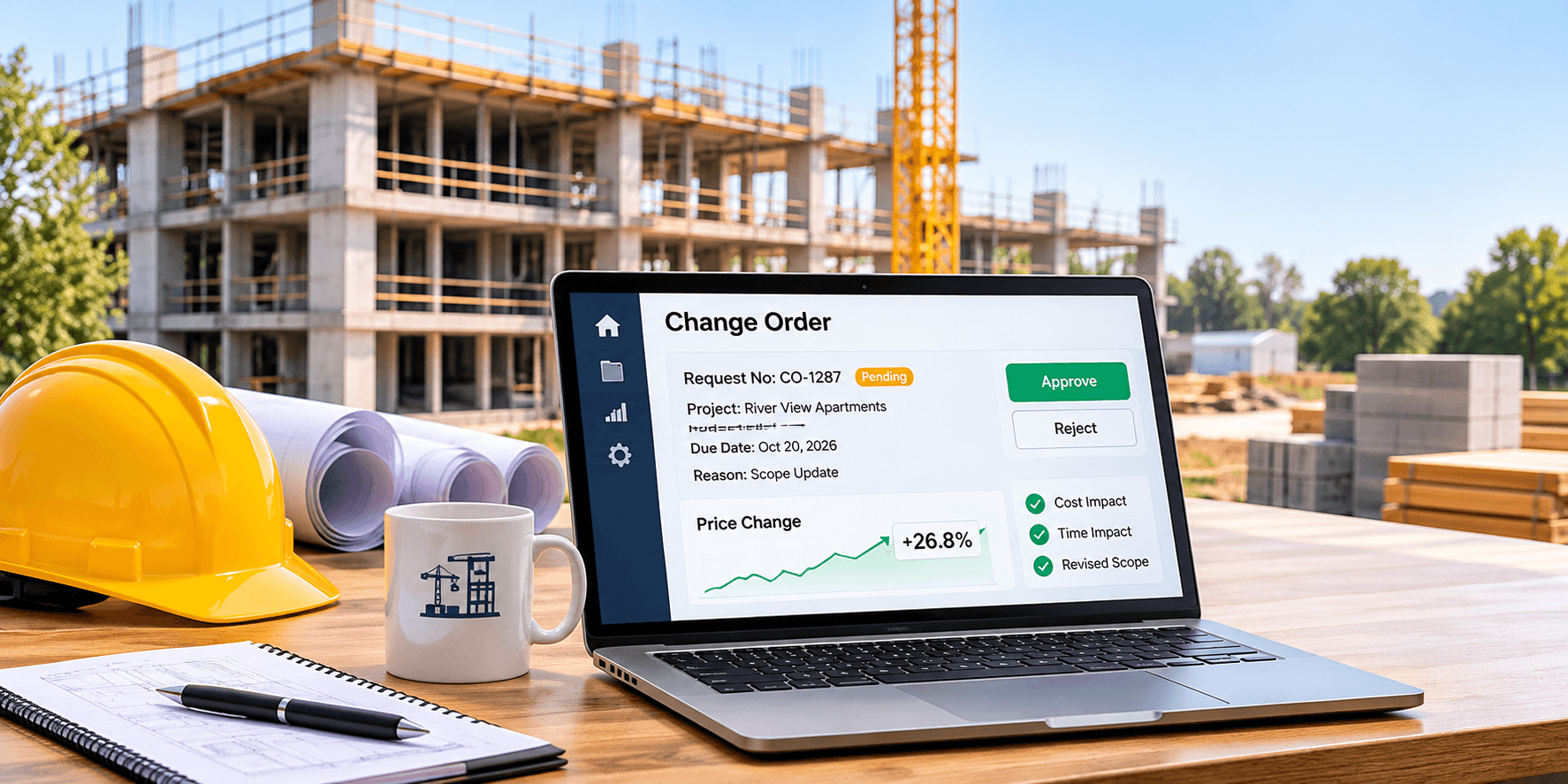
Change management: Record additional work and scope changes so that extra costs are properly reviewed and approved.
How can contractors respond?
Integrate new-age software solutions for effective project based purchasing and cost tracking. Further, they can use construction software to link supplier orders and purchase invoices to the relevant projects. Review budget differences regularly instead of waiting until the project is complete. This makes it easier to identify overspending early and take corrective action.
3. Project Delays and Poor Scheduling
Delays in construction project completion are rarely caused by one issue alone. The construction project delays often result from several small problems that affect one another.
A delay in construction material delivery may prevent one trade from completing its assigned work on time. This means that the next work can’t be completed on time, and the project manager must rearrange the schedule. Some of the prominent reasons for the delays in a construction project include:
Inaccurate initial planning.
Labour or equipment shortages.
Late material deliveries.
Poor coordination between subcontractors.
Unexpected site conditions.
Delayed client decisions and approvals.
Rework caused by unclear instructions or mistakes.
How can contractors resolve this?
To resolve this issue, a contractor needs to build a realistic schedule with clear task dependencies, responsibilities, and deadlines. Use construction project management software or other digital solutions to review progress regularly and update the project plan when conditions change. Keep site managers, subcontractors, and office teams informed about schedule changes. A shared project overview can help everyone work with the same information.
4. Communication Problems
Communication problems are among the most common construction operations challenges that businesses need to handle in 2027. In a construction project, the site team needs to report completed work, material usage, delays, additional requirements, and unexpected issues. On the other hand, the office teams need this information to update schedules, manage purchasing, calculate costs, and prepare invoices.
When these updates happen through separate channels, important details can be missed. Poor construction team communication and coordination can create operational problems that lead to:
Duplicate data entry.
Missing project updates.
Incorrect material orders.
Delayed decisions.
Disputes about completed work.
Incomplete records for invoicing.
How can contractors overcome this challenge in 2027?
To resolve this issue, the contractors need to create a consistent process for recording and sharing project information. Integrate construction software that allows site teams to report hours, materials, photos, and completed tasks directly from the worksite. A connected system helps office teams access these updates without repeatedly asking site staff for information.
5. Managing Multiple Projects and Resources
There are many contractors that handle several construction projects at the same time. However, different deadlines, teams, suppliers, budgets, and client requirements make it difficult to manage all these projects efficiently.
A team may be fully occupied on one project while another job urgently needs the same skills. Equipment may be booked for one site but required elsewhere. Materials purchased for one project may not be available when another team needs them. All these project-related issues affect productivity and increase the risk of unnecessary costs.
How can contractors resolve this issue in 2027?
Construction project management for multiple projects helps contractors maintain a central view of active projects, resource assignments, deadlines, and outstanding tasks. Before accepting new work, review existing commitments and confirm whether the business has enough capacity. Project managers should also monitor resource usage throughout the project rather than relying only on the original plan.
6. Maintaining Project Profitability
One of the biggest misconceptions in the construction industry is that completing a project on time does not automatically mean it was profitable. A contractor may finish the work within the agreed deadline but still lose money because labour hours exceeded estimates, material costs increased, or additional work was not invoiced. The profitability of the construction project depends on understanding the relationship between estimated and actual costs. Common reasons construction projects lose margin include:
Underestimated labour requirements.
Unplanned material purchases.
Rework and wasted resources.
Unrecorded additional work.
Incorrect supplier invoice allocation.
Delayed or incomplete invoicing.
Poor visibility into project expenses.
How to overcome this challenge?
Integrate ERP software solutions to compare planned and actual costs throughout the project. Track labour hours, purchase invoices, material usage, and project revenue. Investigate differences early enough to make changes. Construction cost calculation software with post-calculation capabilities helps contractors understand how the final project result compares with the original estimate. These insights can also improve future quotations and budgets.
How Construction Project Management Software Helps Contractors in 2027
Contractors can use construction project management software to manage several of these challenges through connected workflows and more reliable project information. Don’t think of this software as a replacement for experienced project managers, skilled workers, or good planning. Instead, this software provides teams with better information to make decisions and coordinate daily activities. Here are some of the ways it can support construction businesses.
Centralised Project Information
Project managers can access important project details in one place, including schedules, tasks, customer information, quotes, work orders, and invoices. This reduces dependence on scattered files and messages. It also makes it easier for office teams to understand what is happening across active projects.
Better Work Order Management
Digital work orders help contractors communicate tasks to site teams with clear instructions and responsibilities. Teams can record working hours, materials, photos, and other job information. This creates a more reliable connection between planned work and actual execution.
More Efficient Supplier and Purchase Management
Supplier management tools help contractors organize supplier details, compare prices, create purchase orders, and track purchase invoices. When purchases are linked to projects, managers can understand where money is being spent and review costs more accurately.
Improved Invoicing and Payment Follow-Up
Connected project information makes it easier to prepare invoices based on quotes, work orders, or completed project activities. Contractors can also manage advance, interim, and final invoices, track outstanding payments, and reduce the time spent searching for supporting documents.
How Bouwflow Helps Contractors Manage Construction Operations
Bouwflow provides ERP software for construction that brings key business processes together through project management, planning, work orders, supplier management, invoicing, and pre- and post-calculation. Our OnSitePro mobile app allows site teams to receive digital work orders and register hours, materials, photos, and forms or checklists directly from the worksite. This gives office teams better access to job information and reduces the need to re-enter details manually.
Further, we support supplier and purchasing workflows, helping businesses manage supplier information, compare prices, create purchase orders, and link purchase invoices to projects. For financial control, pre- and post-calculation helps contractors compare estimated and actual project costs. This makes it easier to review labour, purchasing, and project expenses and understand how each job performed.
Construction management software can support this shift by connecting project information and reducing manual work. The goal is not simply to use more technology. It is to give contractors better control over projects, resources, and profitability. Get in touch to know more
FAQs
What are the biggest construction industry challenges in 2027?
Major construction industry challenges in 2027 include skilled labour shortages, rising material and operating costs, project delays, supply chain uncertainty, and pressure to improve productivity. Contractors must also manage more complex projects while keeping costs and schedules under control.
What is the biggest challenge in construction project management?
One of the biggest challenges is coordinating workers, materials, subcontractors, schedules, and budgets while project conditions continue to change. Poor communication and disconnected information make this harder because managers may not have an accurate view of project progress or costs.
How can contractors improve construction operations?
Contractors can improve construction operations by planning resources carefully, standardising work orders, tracking actual project costs, coordinating supplier deliveries, and improving communication between site and office teams. Connected construction management software can help bring these processes together.
How does construction management software reduce project delays?
Construction management software can improve visibility into schedules, assigned tasks, work orders, material requirements, and site progress. This helps managers identify potential problems earlier, coordinate teams, and adjust plans when project conditions change.
Why is cost control important for construction companies in 2027?
Cost control is important because labour, materials, equipment, and supplier expenses directly affect project margins. Tracking estimated and actual costs helps contractors identify overspending, manage additional work, and make more informed decisions before small budget differences become major losses.