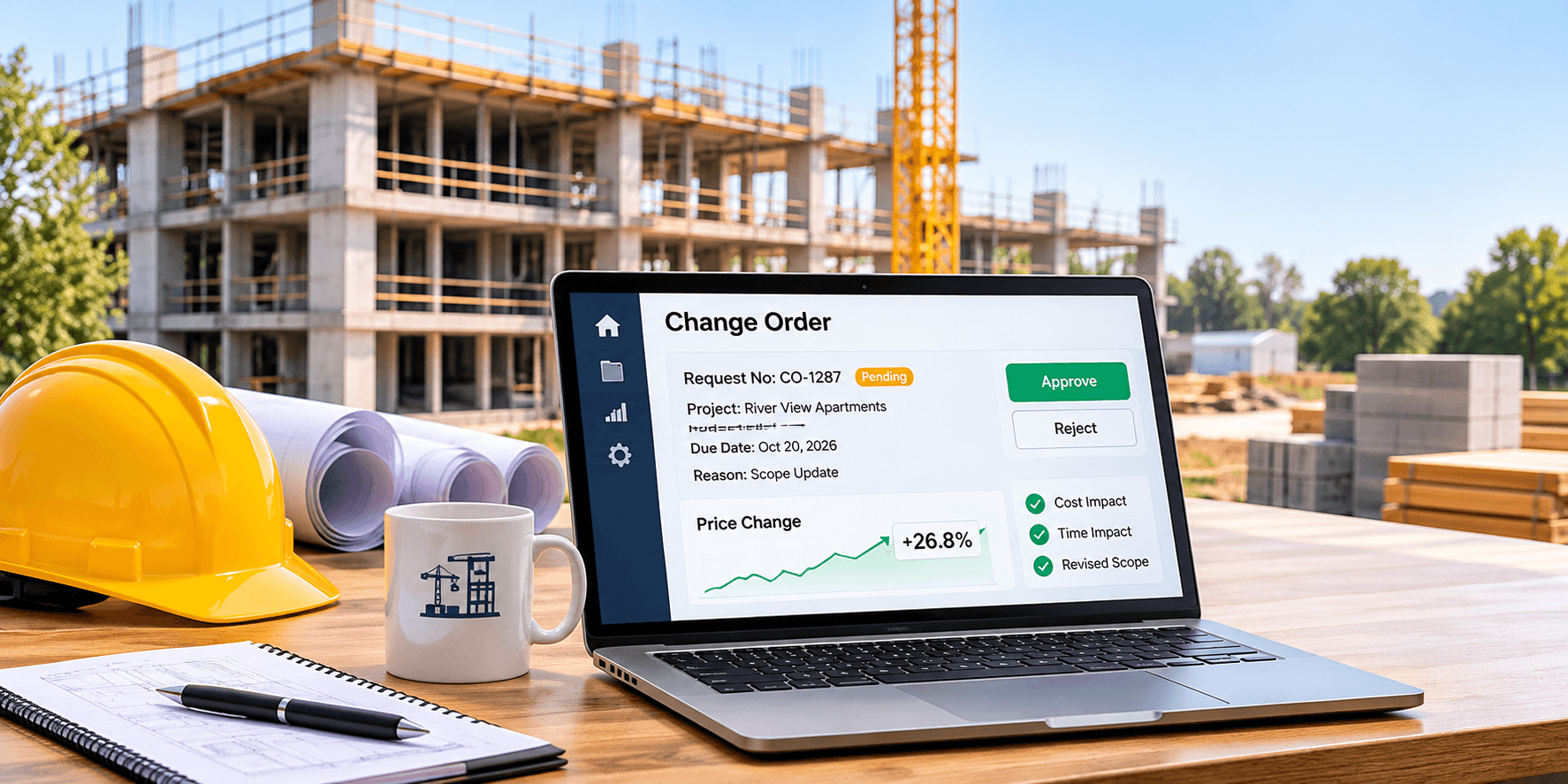
There are various preconstruction tasks that a contractor needs to undertake before undertaking any construction project. Preconstruction activities include preparation of the estimates, calculation of material quantities, requesting suppliers for quotes, preparing quotations, checking costs, and ensuring financial viability of the proposed construction work.
Spreadsheets remain the favored choice of growing construction companies as tools for undertaking various preconstruction activities due to their ease of use, flexibility, and cost efficiency. This is because a contractor undertaking a small project can prepare a quotation template, estimate the cost of materials, and revise the estimates using a spreadsheet.
However, as the number and complexity of projects increase, spreadsheets can become difficult to manage. Different employees may use different versions, supplier prices may not be updated consistently, and important information can get lost between quotations, purchasing, and project execution.
This is where preconstruction software for contractors can make a difference.
But does every contractor need to switch? Not necessarily. The right decision depends on the size of the business, the number of projects, the complexity of estimates, and the limitations of the current process. Keep reading to enhance your understanding of the topic.
Key Takeaways
Spreadsheets work well for simple estimates and smaller construction projects.
Multiple file versions and manual data entry can increase errors as businesses grow.
Preconstruction software can connect estimates, quotations, suppliers, and project workflows.
Contractors should look for structured cost calculations, reusable templates, and easy quotation revisions.
Supplier price management helps improve quotation accuracy.
Connecting approved quotations with purchasing, work orders, and invoicing reduces repeated data entry.
Comparing estimated and actual costs helps contractors understand project profitability.
Why Do Contractors Still Use Spreadsheets for Preconstruction?
There is no doubt that spreadsheet remains useful and popular among contractors and those who deal with construction in their office. There are many contractors who use spreadsheets which they have created over the time for doing calculations of materials, labor, and quotations from clients. In case of small company dealing with just a few construction projects, it is possible because of:
1. Low Initial Cost
Spreadsheet programs may come pre-packaged with the firm’s existing software packages. A contractor is able to develop templates without having to invest in special software designed specifically for the purpose of estimation. Spreadsheets thus remain a viable solution for new or small businesses.
2. Flexible Calculations
Contractors can personalize formulas, define costs, and create calculators that incorporate their own estimation techniques. Understanding the fundamentals of construction cost estimation also helps businesses build more reliable project estimates. In other words, contractors can create customized spreadsheets with formulas for calculating the overall cost of renovations according to labour hours, quantity of materials, supplier prices and overheads.
3. Familiar Workflows
Spreadsheets are familiar to many employees. They can input numbers, manipulate formulas, organize data, and generate reports with little training required.
4. Useful for Simple Projects
If estimates are made on a small number of things and there are a few individuals, a spreadsheet will be adequate. When a contractor is making a simple estimate for a small repair task, he may not require any pre-construction software.
Preconstruction Software vs. Spreadsheets: Key Differences
The biggest difference between preconstruction software and spreadsheets is not simply the number of features. But it’s how information moves through the business. A spreadsheet may calculate a quotation accurately, but contractors still need a reliable way to transfer approved figures into purchasing, project planning, and invoicing. Construction project management software helps connect project information and coordinate the work that follows quotation approval. For contractors, preconstruction software becomes more valuable when it helps connect these activities.
Where Spreadsheets Start Creating Problems
Spreadsheets can and can’t necessarily be the wrong choice. The challenge is that they depend heavily on manual updates, file management, and employee discipline. And as your construction business grows, these limitations can affect your estimating accuracy and project preparation.
1. Multiple Quotation Versions
A quotation may go through several revisions before a client approves it. One employee updates the material prices, another changes the labour estimate, and a third prepares the customer-facing document. If each person works with a separate copy, it becomes difficult to identify the latest version.
2. Manual Data Entry and Repeated Calculations
Spreadsheets may require contractors to enter the same information in different places. Material quantities may be calculated in one spreadsheet, copied into a quotation template, and entered again into a purchasing document. Every additional entry creates another opportunity for mistakes.
3. Limited Collaboration
Spreadsheets can be shared, but collaboration becomes more complicated when several employees need to update the same estimate. The team may need to coordinate who is editing the file, check changes manually, or combine information from different versions. In cases where deadlines are tight, spreadsheets can slow down quotation.
4. Supplier Prices Become Outdated
Material costs can change between the preparation of an estimate and the start of a project. If supplier prices are stored in separate spreadsheets, employees may continue using outdated figures without realizing it. Construction supplier management software helps contractors organize supplier information, compare prices, and manage purchasing details more consistently. This can result in quotations that underestimate actual purchasing costs.
5. Difficult Cost Tracking Across Projects
A spreadsheet may show the estimated cost of one project, but comparing estimates across several jobs requires additional organization. Contractors may struggle to identify recurring cost differences, compare supplier prices, or understand how previous estimates performed against actual expenses. Better project cost visibility is also important when applying construction ERP strategies to improve profit margins.
Construction Quotation Software: What Should Contractors Look For?
Preparing a construction project quotation is one of the most important parts of preconstruction activities. An inaccurate construction quotation can affect profitability before the project even begins. When evaluating construction quotation software, contractors should look beyond document creation. The software should help them prepare accurate prices, manage revisions, and connect quotations with the rest of the business.
1. Structured Cost Calculations
The software should support the cost categories relevant to the contractor’s work. These cost calculations may include material quantities and prices, labour hours and rates, equipment and machinery costs, subcontractor charges, transport and delivery expenses, and overhead and profit margins. A structured calculation makes it easier to understand how the final quotation has been prepared and identify areas where costs may have been missed. General contractors can also explore construction project estimation methods to improve the accuracy of their project calculations.
2. Reusable Quotation Templates
Contractors often prepare similar quotations for recurring types of work. Reusable templates can reduce repetitive administration and help maintain consistency across documents. Employees should be able to adjust quantities, prices, descriptions, and other project-specific details without rebuilding the quotation each time.
3. Easy Quotation Revisions
Clients may request changes before approving a quotation. A contractor might need to adjust material specifications, remove an item, or add another activity. The software should make it easy to revise the quotation while keeping the latest information clear.
4. Supplier Price Management
Supplier prices have a direct impact on quotation accuracy. Look for a solution that helps maintain supplier information, compare prices, and review purchasing costs. This makes it easier to prepare estimates using relevant price information rather than relying on old spreadsheets.
5. Clear Project Handover
Once a client accepts a quotation, the information should be useful beyond the sales stage. Ideally, approved quotation details should support project planning, purchasing, work orders, and invoicing. This reduces repeated data entry and helps ensure that the project team works from the agreed scope and prices.
How Bouwflow Supports Quotation and Project Cost Management
Preconstruction information is most useful when it remains connected to the work that follows. A quotation should not become an isolated document once the client approves it. Contractors can use our construction ERP software to connect important business processes, including quotations, project management, work orders, supplier management, invoicing, and pre- and post-calculation.
Our software’s quotation and project workflows help businesses organize customer offers and carry approved project information into execution. Supplier management supports supplier records, price comparisons, purchase orders, and purchase invoice tracking.
Once work begins, digital work orders can help site teams register hours, materials, and photos through our OnSitePro mobile app. The software’s pre- and post-calculation features also help contractors compare estimated costs with actual expenses. Connecting these workflows with construction software accounting integration can further improve financial visibility across projects. By reviewing registered hours, purchase invoices, and project invoices, businesses can understand where project costs differ from their original calculations.
Conclusion
Spreadsheets continue being beneficial for contractors who have simple estimates and few projects. Spreadsheets are flexible and cheap, which makes them suitable for construction firms.
Nonetheless, when there is an increase in the number and complexity of projects, there may be challenges in manually calculated figures, multiple versions of files, outdated prices from suppliers, and workflow disconnection.
It would be wise to use pre-construction software that will take care of such issues as organizing the estimating process, creating quotations, supplier information, and passing the project forward.
There are different types of software that contractors can choose depending on the needs of their business. Nevertheless, the best software will always go beyond replacing the formulas of a spreadsheet.
One must assess the current workflow process, determine what is problematic, and try out the software on a specific project. The best software is the one that makes the pre-construction process easy and efficient.
FAQs
Is preconstruction software better than spreadsheets for contractors?
It depends on the needs of the contractor. Excel is good for making simple calculations and estimating projects of low volume. Preconstruction programs tend to be better when businesses require quotations, supplier management, communication, reports, and project flow.
What is the difference between preconstruction software and construction quotation software?
The pre-construction software is used for various operations such as estimation, budgeting, supplier coordination, and project planning. The construction quotation software is specifically designed for creating, pricing, editing, and managing customer quotations.
Can construction quotation software calculate labour and material costs?
Construction quotation programs offer calculation features for labor and material costs. It also depends on the software that contractors are able to calculate other costs such as equipment, subcontractor, transportation, and many others.
When should a contractor stop using spreadsheets for estimating?
A contractor may choose to make a switch when spreadsheets have posed difficulties like conflicting versions, duplicate entries, out-of-date pricing, miscalculations, and trouble with exchanging information. The switch should be made depending on workflow needs and not necessarily company size.
Can preconstruction software connect quotations with project management?
Some programs link approved quotations with planning for projects, buying, work orders, and invoices. The contractors need to check the software to find out the extent of the integration before they choose their program.