Most steel construction projects depend on close coordination between engineering teams, steel fabrications, procurement departments, workshop supervisors, transport providers, and site crews. The delay in one construction activity for any reason directly impacts several other activities.
If approved drawings arrive late, fabrication may stop.
If materials are unavailable, production schedules can shift.
If completed components are not delivered on time, the erection team may remain idle.
Managing all these construction activities requires more than a basic project schedule. Contractors need reliable information about project progress, resource availability, material status, labour hours, costs, and upcoming deadlines. This is where steel construction project monitoring software can become a valuable tool. The software provides project managers with a structured way to follow activities, identify problems, and make decisions using current project information.
However, the market includes several types of software. Some are developed specifically for steel fabrication, while others focus on construction project management, production planning, or business operations. Understanding these differences is essential before choosing a solution.
Key Takeaways
Steel construction projects require coordination between engineering, procurement, fabrication, transportation, and site teams.
Project monitoring software helps contractors track schedules, responsibilities, resources, and project progress.
Fabrication tracking should cover production activities, work orders, quantities, and operational status.
Centralized document management helps teams access drawings, specifications, revisions, and approvals.
Supplier and material management helps reduce procurement delays and improve material visibility.
Labour and resource tracking helps managers monitor working hours, assignments, and resource utilization.
Comparing estimated and actual costs helps contractors identify budget differences and monitor project profitability.
An integrated construction ERP platform connects project management, work orders, purchasing, site registrations, and financial operations.
Why Steel Fabricators and Contractors Need Project Monitoring Software
Steel construction projects have several dependencies that make progress monitoring particularly important. A project can appear to be progressing well in the workshop while a material shortage or unresolved drawing revision is creating a delay elsewhere. Here are some of the main challenges that monitoring software can help address.
1. Coordinating Multiple Project Stages
Steel construction usually follows a sequence of connected activities, including engineering, detailing, procurement, fabrication, transportation, and erection. A project manager must understand how a delay in one activity can directly affect the next one. For instance, steel fabrication cannot proceed effectively if the workshop is using outdated drawings or waiting for material approvals. Construction project management software helps project managers organize activities, assign responsibilities, manage deadlines, and keep project updates accessible in one place.
2. Monitoring Fabrication Progress
Fabrication involves several operations such as cutting, drilling, welding, assembly, surface treatment, and finishing. Each operation may have its own planned duration and production requirements. Without proper tracking, project managers may only discover delays when a delivery milestone is approaching. This is where project management software can provide greater visibility into production stages. Depending on the platform, supervisors may use construction work order management software to track work orders, assignments, quantities, and work progress.
3. Managing Materials and Procurement
The timely completion of the steel construction project depends on the timely availability of raw materials, components, and other supplies. Late deliveries can interrupt project workflow, while excess purchasing can increase storage costs and tie up working capital. Project monitoring software effectively addresses these issues by making it easier to connect material requirements with project schedules and purchasing activities.
4. Keeping Project Costs Under Control
Construction cost calculation software helps contractors compare estimated project costs with actual expenditure and understand how labour, materials, and other expenses affect project budgets. When labour hours, purchase invoices, and project expenses are recorded consistently, managers gain a clearer understanding of project performance. Keeping project costs under control is particularly useful when a company handles several steel construction projects at the same time.
5. Improving Communication Between the Office and Site
Project information is often spread across emails, phone calls, spreadsheets, paper forms, and messaging applications. This creates opportunities for missing updates and inconsistent records. A connected platform gives office employees and site teams access to relevant project information. Digital work orders, photos, notes, and progress records can help reduce repeated communication and manual data entry.
Essential Features to Compare in Steel Construction Project Monitoring Software
Before you start comparing different steel construction project monitoring software, it’s important that you identify what features your business actually needs. The ideal construction software should support your business workflow that causes the most coordination or visibility problems in your operations.
1. Project Planning and Scheduling
Project planning is an essential feature that lays the foundation for effective monitoring of the construction project. The ideal software should allow managers to organize activities, assign responsibilities, establish deadlines, and monitor progress against the project schedule. Look for software with:
Task and milestone management.
Project timelines and scheduling views.
Responsibility assignment.
Dependency tracking.
Deadline notifications.
Multi-project planning.
For construction businesses managing multiple steel fabrication and installation projects, resource visibility is essential, particularly when using construction scheduling software to coordinate workloads, deadlines, and resource availability. The software should include features that allow project managers to identify scheduling conflicts before they affect delivery commitments.
2. Fabrication and Production Tracking
General construction project management tools may not provide the detailed production controls required by steel fabricators. That’s why, for businesses where workshop operations are a major part of your business, evaluate whether the software can track fabrication activities at the level you need. Make sure your software includes features such as:
Work order and production status tracking.
Assembly and component-level progress.
Production planning and scheduling.
Labour and machine utilization.
Drawing and revision management.
Workshop performance reporting.
3. Drawing and Document Management
Steel construction depends heavily on accurate technical documentation. Drawings, specifications, revisions, approvals, and fabrication instructions must reach the right people at the right time. The ideal software should make project documents easy to organize, retrieve, and associate with the relevant work. Check whether the platform supports:
Centralized project document storage.
Drawing and file access.
Revision identification and control.
Document sharing between departments.
Links between documents and production activities.
Integration with detailing or BIM applications.
4. Material and Supplier Management
Make sure the software you choose can easily connect the project requirements rather than handling an isolated administrative activity. Look for software that supports supplier information, purchase orders, purchasing records, material availability, and project-related costs. For steel fabricators, more specialized requirements may include bill of materials management, nesting, stock optimization, and material traceability. And these features are not included in every project monitoring platform.
5. Labour and Resource Tracking
Tracking labour and resources affects both fabrication and site installation. A project manager needs software to understand who is assigned to a job, how many hours are being spent, and whether resources are being used as planned. Look for software with useful capabilities such as:
Employee and team scheduling.
Work order assignments.
Timesheet and hour registration.
Planned versus actual labour hours.
Department-level workload visibility.
Resource allocation across projects.
6. Cost Monitoring and Reporting
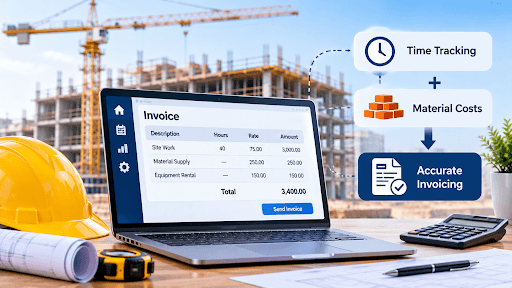
Project monitoring should connect operational progress with financial performance, while construction invoicing software helps businesses connect project activities, work orders, and quotations with customer billing. The software should include a dashboard showing completed tasks, but it becomes more valuable when managers can also understand the financial impact of those activities. Compare software based on its ability to track:
Estimated and actual project costs.
Labour expenses.
Material and supplier invoices.
Subcontractor costs.
Project invoicing and payments.
Budget differences and profitability.
Bouwflow vs. Other Steel Construction Project Monitoring Solutions

How Bouwflow Supports Construction Project Monitoring
Steel construction businesses need to coordinate more than fabrication activities. Contractors also manage customers, suppliers, site teams, work orders, purchasing, and project finances.
Bouwflow’s ERP software connects several of these business processes through one construction management platform. Our software’s project management and customer management capabilities help keep project-related information organized. Supplier management supports purchasing activities, while invoicing connects financial administration with quotations, projects, and work orders.
The OnSitePro mobile app adds a practical connection between the office and the construction site. Site teams can receive digital work orders, register hours and materials, and attach photos or forms. Office employees can then review the information associated with the relevant project and work order.
Our software’s pre- and post-calculation capabilities help businesses compare estimates with actual costs using information such as registered hours and purchase invoices. This supports construction performance monitoring by helping managers understand project progress and financial results. This can help construction companies understand where project expenditure differs from the original plan and improve future estimates.
Final Thoughts
Choosing the right steel construction project monitoring software is essential for improving project coordination, maintaining production schedules, controlling costs, and ensuring timely project delivery. The best solution depends on your business requirements, whether you need detailed fabrication tracking, material and resource management, document control, financial monitoring, or better communication between office and site teams.
Before making a decision, compare different solutions based on how well they support your actual workflows and connect different stages of your operations. For steel fabricators and contractors looking for more than basic project scheduling, an integrated platform can provide greater visibility across projects, purchasing, work orders, labour, and finances.
Bouwflow helps bring these processes together through its ERP software and OnSitePro mobile app. By connecting project management, supplier management, work orders, site registrations, and cost calculations, we help construction businesses maintain better control over their projects and make more informed decisions.
Frequently Asked Questions
Is steel fabrication project management software different from construction project management software?
Yes. Steel fabrication project management software focuses on workshop activities such as production planning, assembly tracking, material optimization, and fabrication control. General construction project management software typically focuses on scheduling, documentation, site coordination, communication, and project administration.
Can project monitoring software track fabrication progress in real time?
Some specialist platforms provide real-time or regularly updated production tracking. The available detail varies by system and may include operation status, completed quantities, machine activity, or workshop updates. Confirm what data is captured automatically and what employees must enter manually.
What features should steel fabricators prioritize?
Steel fabricators should evaluate production planning, drawing and revision management, material purchasing, inventory, assembly tracking, labour monitoring, quality traceability, shipping, and project cost reporting. CNC integration and nesting may also be important for automated workshops.
Can construction project monitoring software help control project costs?
Yes. Software can help compare estimated and actual expenditure by connecting project budgets with registered labour hours, purchase invoices, supplier costs, and other expenses. The quality of the results depends on accurate and consistent data entry.
Can one software platform manage both fabrication and construction activities?
Some platforms cover a wide range of business processes, but not every system provides specialist fabrication capabilities. A steel construction company may use a dedicated fabrication platform alongside a broader construction management solution. Integration between the systems is important to avoid duplicate records and disconnected workflows.